Understanding Conscious Operations: A Modern Approach to Surgery
Awake surgery is a surgical technique where patients remain conscious and alert during the procedure, using only local anesthesia or minimal sedation instead of general anesthesia. This approach allows surgeons to interact with patients in real-time, monitor critical functions, and achieve better outcomes with faster recovery times.
Quick Overview: What You Need to Know
- What it is: Surgery performed while you’re awake and able to communicate, using local anesthesia
- Where it’s used: Brain surgery (tumors, epilepsy), cosmetic procedures (liposuction, mini facelifts, eyelid surgery)
- Key benefits: Faster recovery (24-48 hours for some procedures), fewer complications, no general anesthesia risks, lower costs
- Recovery: Most patients return to normal activities within 1-2 days for cosmetic procedures; brain surgery patients often go home the next day
- Safety: Studies show fewer neurological deficits (7% vs. 23%) and shorter hospital stays (1.7 vs. 9 days) compared to general anesthesia
The concept might sound intimidating at first. One patient described singing Disney songs during her five-hour awake brain surgery, saying it felt like time passed quickly. For cosmetic procedures, patients often walk out of the clinic shortly after treatment, avoiding the grogginess and nausea that comes with general anesthesia.
The technique works because many parts of the body—including the brain itself—don’t have pain receptors. With careful numbing of the skin and surrounding tissues, surgeons can work while patients remain comfortable and alert.
I’m Dr. Thomas Jeneby, a board-certified plastic surgeon who has been practicing in San Antonio since 2002. Over my 20+ years performing awake surgery techniques for cosmetic procedures, I’ve helped thousands of patients achieve their aesthetic goals using local anesthesia and tumescent techniques, eliminating the need for general anesthesia in many cases. This patient-centered approach has transformed how we deliver safe, effective care with minimal downtime.
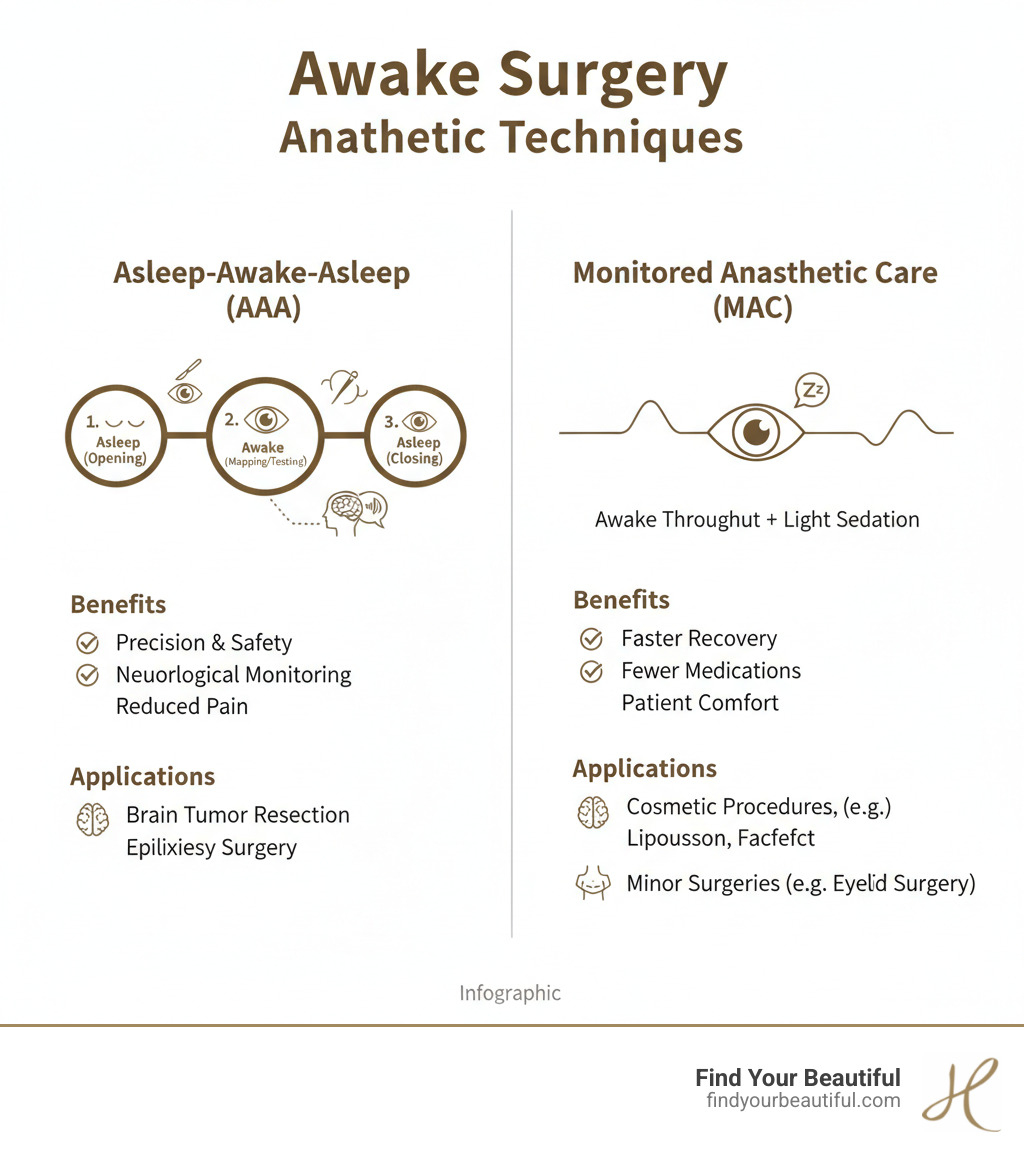
Basic awake surgery glossary:
The Fundamentals: What It Is and Why It’s Chosen
Awake surgery is a groundbreaking approach that keeps patients conscious and involved during their procedure, offering a compelling alternative to traditional surgery under general anesthesia. It provides numerous benefits, from improved safety to quicker recovery.
What Is Awake Surgery and How Does It Work?
Awake surgery means performing an operation while the patient is conscious. It’s a carefully managed state where local anesthetics numb the surgical area, often combined with mild sedatives for comfort and relaxation. The goal is to keep you calm and able to communicate without pain.
In brain surgery, this allows surgeons to get real-time feedback to preserve vital functions like speech and movement. For cosmetic procedures at Find Your Beautiful in San Antonio, it creates a patient-centric experience where you can interact with the surgical team.
The technique uses local anesthesia to numb the surgical site. For brain surgery, a neuroanesthesiologist may use “monitored anesthetic care” (MAC), where you’re relaxed but awake, or an “asleep-awake-asleep” (AAA) technique, where you’re woken for the critical part of the operation. Since the brain has no pain receptors, the procedure is comfortable once the scalp is numbed. For cosmetic procedures, we use tumescent local anesthesia—a dilute anesthetic solution injected into fat to provide numbing and minimize bleeding.
Key Benefits: Safety, Recovery, and Cost
The advantages of choosing awake surgery are numerous and impactful.
- Improved Safety: By avoiding general anesthesia, awake surgery eliminates associated risks, making it a safer option for many, especially those with underlying health conditions. For brain procedures, it leads to fewer neurological deficits (7% vs. 23%) compared to general anesthesia.
- Faster, Smoother Recovery: Patients avoid the groggy “anesthesia hangover,” allowing a quicker return to daily activities. Many cosmetic procedure patients resume their routine in 24-48 hours, and brain surgery patients often go home the next day, drastically reducing hospital stays (1.7 vs. 9 days).
- Reduced Costs: The overall cost is often lower by avoiding hospital stays and extensive resources for general anesthesia, making aesthetic procedures more accessible.
- Patient Control and Comfort: Being awake provides a sense of control. At Find Your Beautiful, we create a calm environment where you can relax, listen to music, or chat with the team, fostering confidence.
Here’s a quick comparison of awake surgery versus traditional surgery:
| Feature | Awake Surgery | Traditional Surgery (General Anesthesia) |
|---|---|---|
| Anesthesia Type | Local anesthesia, conscious sedation | General anesthesia (patient unconscious) |
| Patient Consciousness | Awake, alert, able to communicate | Unconscious, no communication |
| Recovery Time | Faster (e.g., 24-48 hours for cosmetic, 1-2 days for brain) | Slower (anesthesia “hangover,” longer hospital stays) |
| Neurological Deficits | Fewer (7% for brain surgery) | More (23% for brain surgery) |
| Hospital Stay | Shorter (1.7 days for brain surgery) | Longer (9 days for brain surgery) |
| Cost | Often lower (avoids hospital/anesthesia fees) | Generally higher |
| Patient Control | High (can provide real-time feedback) | None |
| Risks | Avoids general anesthesia risks | Risks associated with general anesthesia |
Applications and Candidacy: Is It Right for You?
Awake surgery is a versatile approach used across multiple specialties. While well-known in brain surgery, it has also become a game-changer in cosmetic and plastic surgery, offering a safer, more comfortable path to aesthetic goals.

Common Procedures Performed with Awake Surgery
In neurosurgery, awake surgery is essential when operating near the eloquent cortex—the areas controlling speech, movement, and vision. Since the brain lacks pain receptors, patients can remain conscious. This allows surgeons to map the brain by asking the patient to perform tasks, ensuring critical functions are protected. Common neurosurgery applications include removing brain tumors near critical areas, epilepsy surgery to remove seizure-causing tissue, and placing electrodes with pinpoint accuracy for deep brain stimulation in Parkinson’s patients.
These principles have been adapted for plastic surgery. At Find Your Beautiful in San Antonio, we use awake techniques for same-day procedures that avoid hospital stays and the grogginess of general anesthesia.
Awake Liposuction is one of our most popular offerings. Using tumescent local anesthesia, we sculpt areas like the abdomen, flanks, and thighs by removing unwanted fat. This technique numbs the area and minimizes bleeding, making for a surprisingly comfortable experience. Learn more in our guide on Awake Liposuction San Antonio.
Upper eyelid surgery is also ideal for local anesthesia, allowing us to remove excess skin and puffiness to refresh your appearance while you are awake. Similarly, mini facelifts and neck tightening can address sagging skin in the lower face without general anesthesia, ensuring a faster recovery. We also perform scar revision, skin tightening, and fat transfers to the face, hands, or breasts while you’re awake for minimal downtime. See which areas can benefit in our resource on Body Areas That Can Be Treated With Liposuction.
Who is a Good Candidate (and Who Isn’t)?
Choosing awake surgery depends on your physical and psychological readiness. It’s not for everyone, and during your consultation, we’ll determine if it’s the right fit for you.
Ideal candidates are motivated patients who are comfortable with being conscious and can remain relatively still and calm. Patient cooperation is key, though we ensure you are relaxed. Many patients enjoy listening to music or chatting with our team. Good overall health is important. While awake surgery avoids general anesthesia risks, you must be healthy enough for the procedure. For cosmetic surgery, being a non-smoker is crucial for healing, and procedures like liposuction require sufficient fat.
Psychological preparation is also key. If you have significant anxiety disorders or claustrophobia, the experience may be too stressful, even with sedation. Your comfort is our priority. Certain medical conditions can also make awake surgery less ideal. Obstructive sleep apnea increases respiratory risks with sedation, and a very low pain tolerance can make the pressure sensations difficult. For brain surgery, patients must be able to follow commands.
A thorough medical history review during your consultation helps us determine the safest approach. Some complex health issues may still require general anesthesia. We review everything to create your personalized plan. If you’re interested in liposuction, explore our guide to see if you’re a good fit: Are You a Candidate for Liposuction?
The bottom line is that awake surgery offers incredible benefits for the right patients, but it’s not a one-size-fits-all solution. We’re here to help you make the best decision for your unique situation.
The Awake Surgery Experience: Comfort, Risks, and Recovery
Knowing what to expect during awake surgery can ease concerns. Modern techniques have made this approach remarkably comfortable and safe, with your wellbeing as our central focus.
Managing Pain and Anxiety During the Procedure
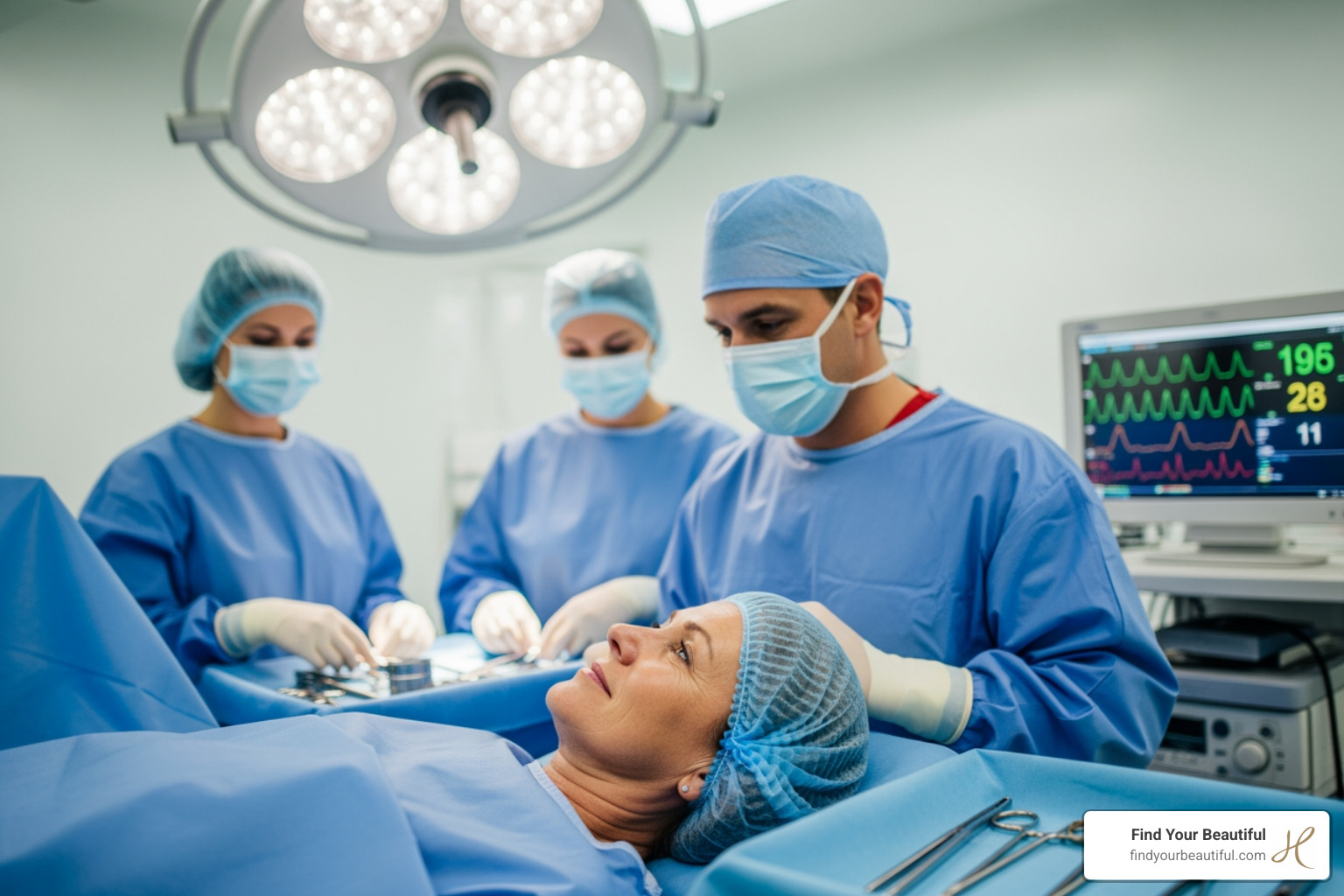
Your comfort is our priority. Our refined approach ensures you remain pain-free and relaxed throughout the procedure. Comfort begins with local anesthetic injections. For cosmetic procedures at Find Your Beautiful, we use tumescent anesthesia to thoroughly numb the area. You may feel a brief pinch, but the area quickly becomes numb. For brain surgery, local anesthetics numb the scalp; the brain itself has no pain receptors, so the procedure is painless once the outer layers are numbed.
Scalp blocks, or regional nerve blocks, provide comprehensive pain relief for neurosurgery. Conscious sedation creates a deeply relaxed state. IV medications help you feel calm and drowsy but able to respond, and an anesthesiologist continuously monitors and adjusts your sedation for optimal comfort. An oral sedative taken before a cosmetic procedure can also ease nervousness. We also provide non-medical comfort measures, like music or conversation with our supportive team. For more details on anesthesia techniques, you can explore resources like Anesthesia for Awake Craniotomy.
Potential Risks and Complications
Like any surgery, awake surgery has risks, but many complications are less frequent or severe than with general anesthesia. For awake craniotomy, the most common complication is intraoperative seizures (2-20% of cases), which are typically brief and managed immediately by the prepared surgical team. Other risks include nausea (approx. 4%), hypertension, and rarely, a failed awake craniotomy (~2%) that must be converted to general anesthesia. Air embolism is a rare but serious risk in certain craniotomies, managed through careful patient positioning and monitoring.
While awake surgery aims to minimize post-operative deficits, temporary changes can occur. However, the risk is significantly lower than with general anesthesia (7% vs. 23%).
For cosmetic awake surgery at Find Your Beautiful, risks are lower. Expect temporary bruising, swelling, or numbness. Infection is rare with proper care, and minor irregularities can often be addressed in a follow-up. The key benefit is avoiding general anesthesia risks, making it a safer choice, especially for those with underlying health conditions. Tumescent anesthesia includes epinephrine to minimize bleeding, making the procedure safer and leading to less bruising and faster healing.
Your post-operative care begins immediately. Cosmetic procedure patients walk out shortly after with instructions, while brain surgery patients typically go home the next day—a much shorter stay than the 9-day average for general anesthesia. We provide clear recovery guidance and remain available to answer your questions, ensuring a smooth, comfortable recovery.
The Science and Technology Behind Conscious Operations
The success of awake surgery relies on cutting-edge science and technology that enable incredible precision. These innovations allow surgeons to steer delicate structures while preserving the functions that define us.
Brain Mapping in Neurosurgery
In brain surgery, real-time brain mapping is a key aspect of the awake approach. It’s crucial when operating near the eloquent cortex, which controls functions like speech, movement, and sensation. Because no two brains are wired identically, pre-operative imaging like functional MRI (fMRI) provides only a general roadmap. Awake surgery is invaluable for mapping the precise location of critical areas for each individual.
During the procedure, the surgeon uses Direct Electrical Stimulation (DES). A tiny electrical current is applied to the brain’s surface with a probe, temporarily and harmlessly interrupting that area’s function to identify its role. While this happens, you perform simple tasks like counting, naming objects, or moving your fingers. If stimulation interrupts a function, the surgeon knows that area is critical and must be preserved.
This real-time feedback allows surgeons to maximize tumor removal while avoiding critical areas, leading to fewer neurological deficits compared to traditional surgery. Advanced tools like 5-ALA fluorescence-guided surgery, which makes tumors glow, work best when combined with the functional mapping unique to awake surgery. The Mayo Clinic provides more insight into these combined techniques.
Advancements in Cosmetic and Plastic Surgery
The innovations in cosmetic awake surgery are equally impressive, changing our approach to body contouring and aesthetic procedures. The refinement of tumescent local anesthesia has been a game-changer. This technique uses a diluted anesthetic solution with epinephrine injected into fatty tissue. The epinephrine constricts blood vessels, reducing bleeding and allowing us to safely numb large areas without general anesthesia.
The injection process is gentle, using fine needles to evenly distribute the anesthetic. Patients typically feel an initial pinch followed by pressure, but no sharp pain. This approach also eliminates the need for uncomfortable tourniquets on arms or legs. The tumescent anesthesia with epinephrine creates a bloodless field without the discomfort and heavy sedation required for tourniquets.
Our improved safety protocols allow us to perform procedures in specialized minor procedure rooms. We maintain rigorous sterility standards while eliminating unnecessary overhead, making care more affordable without compromising safety. This technique allows for remarkable precision. During Liposuction, I can interact with you, having you adjust your position to see the contours develop in real time. This interaction, impossible under general anesthesia, leads to more natural results.
These advancements reflect a shift toward patient-centric care. By keeping you awake and comfortable, we partner with you to achieve your desired results with less risk and faster recovery.
Frequently Asked Questions about Awake Procedures
Many people have questions about awake surgery. It’s natural to wonder about the experience. Here are answers to the most common concerns.
Will I feel any pain during the operation?
No, you shouldn’t feel pain. Your comfort is our top priority. We use powerful local anesthetics, like tumescent anesthesia for cosmetic procedures, to completely numb the area. You may feel pressure or movement, but not sharp pain—similar to dental work. An anesthesiologist monitors your comfort throughout and can make immediate adjustments if you feel any discomfort.
How long does recovery take?
Recovery is where awake surgery shines. Without general anesthesia to recover from, you’ll bounce back remarkably fast.
For cosmetic procedures like liposuction or mini facelifts at our San Antonio practice, most patients resume daily activities in 24 to 48 hours. You’ll avoid the “anesthesia hangover” and experience less swelling. Even after complex awake brain surgery, patients often go home the next day, compared to a week or more in the hospital after general anesthesia.
Is awake surgery safer than general anesthesia?
For the right candidates, awake surgery is significantly safer. It avoids the risks of general anesthesia, such as adverse drug reactions, breathing issues, and cardiovascular stress, making it ideal for those with underlying health conditions.
Beyond avoiding anesthesia risks, studies show awake craniotomy patients have fewer neurological deficits (7% vs. 23%) because surgeons can test and preserve brain function in real-time. At Find Your Beautiful, we conduct a thorough evaluation to ensure awake surgery is the safest and most effective option for you. Safety is our foundation.
Conclusion: The Future of Patient-Centric Surgery
Awake surgery is more than just a medical technique—it’s a philosophy that puts you at the center of your own care. By keeping patients conscious and involved during procedures, we’re not just performing surgery; we’re creating a partnership that respects your comfort, values your input, and honors your time.
The results speak for themselves. Patients wake up without that groggy, disoriented feeling. They go home faster. They return to work, family, and life sooner. And perhaps most importantly, they feel empowered rather than passive in their own healthcare journey.
For neurosurgery, awake surgery has revolutionized how we protect the very essence of who you are—your ability to speak, move, and think. For cosmetic procedures, it’s opened doors to aesthetic improvements that once seemed out of reach due to concerns about general anesthesia, recovery time, or cost.
At Find Your Beautiful in San Antonio, we’ve witnessed how this approach transforms lives. Our patients appreciate the transparency of being awake, the comfort of avoiding general anesthesia, and the confidence that comes from working with board-certified surgeons who prioritize both safety and natural, beautiful results.
The future of surgery is personalized. It’s about meeting you where you are, understanding your unique needs and concerns, and crafting a treatment plan that respects your body, your schedule, and your goals. Whether you’re considering liposuction to refine your contours, a mini facelift to refresh your appearance, or any other aesthetic improvement, awake surgery offers a gentler, more controlled path forward.
We believe you deserve to feel beautiful in your own skin—and that the journey to get there should be as comfortable and empowering as the destination. Our expert team is here to guide you through every step, answering your questions, addressing your concerns, and delivering the personalized care you deserve.
If you’re ready to find how awake surgery can help you achieve your aesthetic dreams with confidence and comfort, we’d love to hear from you. Schedule a consultation with our team and find out what makes conscious, patient-centric care so transformative.
Explore advanced Liposuction techniques and take the first step toward your beautiful future.