Is a Tummy Tuck Right for You?
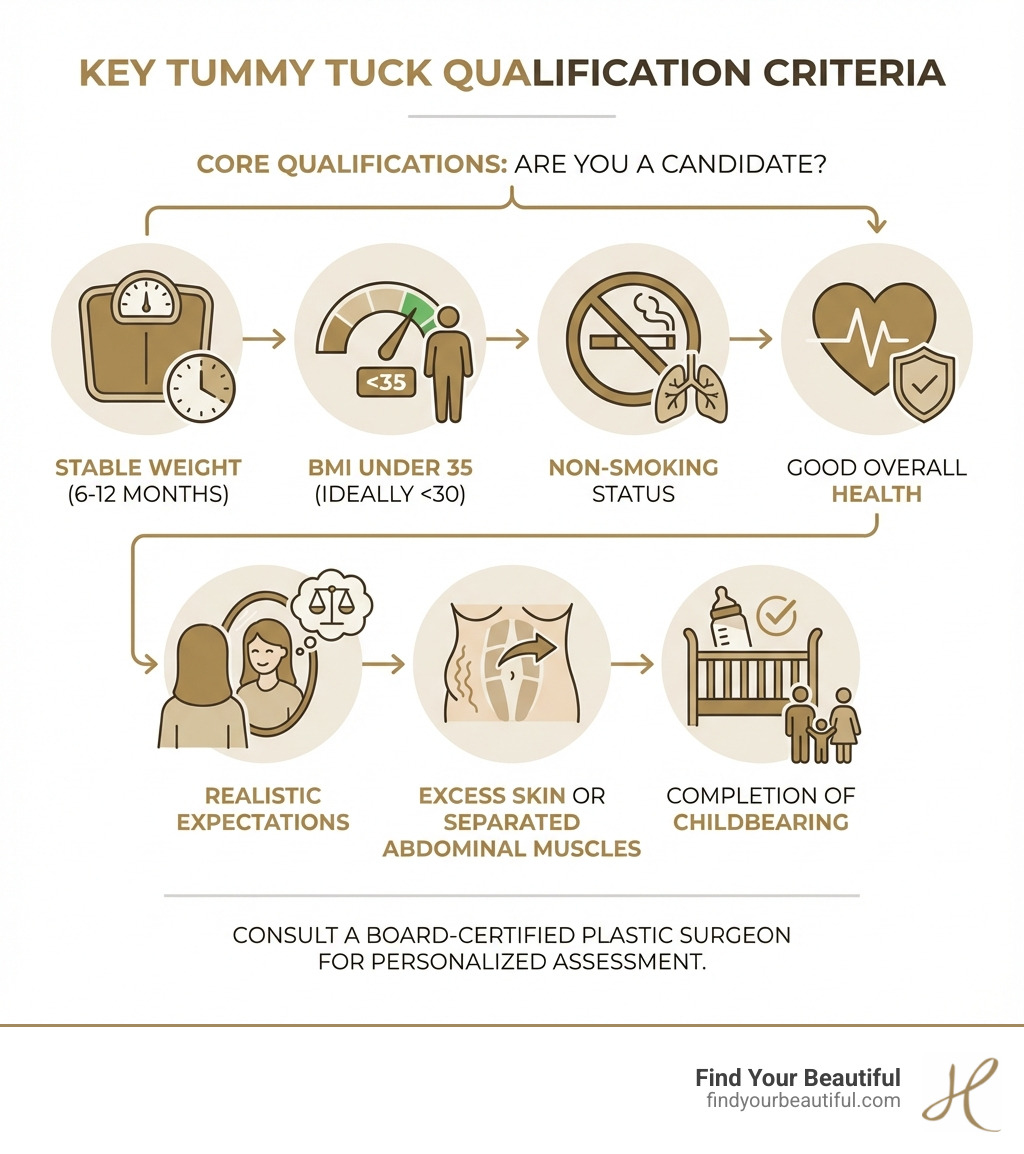
How to qualify for a tummy tuck depends on several key factors that go beyond simply wanting a flatter abdomen. If you’re wondering whether you’re a good candidate, here’s what you need to know:
Key Qualifications for a Tummy Tuck:
- Physically healthy and at a stable weight
- Non-smoker (or willing to quit for at least 6 weeks before and after surgery)
- Have realistic expectations about results
- Bothered by excess skin, fat, or separated abdominal muscles
- BMI under 35 (ideally under 30)
- Stable weight for at least 6-12 months
- Finished having children (if applicable)
Have you ever looked in the mirror and wished you could tighten up your midsection, maybe get rid of that extra skin or stubborn belly bulge that just won’t go away no matter how much you exercise? You’re not alone. Many people find that diet and exercise can’t address certain abdominal changes caused by pregnancy, significant weight loss, or simply aging.
A tummy tuck (abdominoplasty) is a surgical body contouring procedure that removes excess skin and fat while tightening weakened abdominal muscles. It’s not a weight-loss surgery—it’s designed to address specific issues that lifestyle changes alone cannot fix.
The procedure can be life-changing for the right candidates, but it’s important to understand that it requires a significant commitment to recovery and isn’t suitable for everyone. Certain health conditions, lifestyle factors, and timing considerations all play a role in determining candidacy.
I’m Dr. Thomas Jeneby, a board-certified plastic surgeon who has been practicing since 2002 and has performed thousands of body contouring procedures, including over 9,000 revisions. Understanding how to qualify for a tummy tuck is the first step toward determining if this procedure can help you achieve your aesthetic goals safely and effectively.
How to qualify for a tummy tuck vocab to learn:
The Core Checklist: Foundational Tummy Tuck Qualifications
Before diving into specifics, it’s crucial to meet a set of foundational criteria. A good candidate for a tummy tuck is someone who is pursuing surgery for their own personal satisfaction, not to fulfill someone else’s desires or to try to fit any sort of ideal image. This is a highly individualized procedure, and your motivation should always come from within. Your surgeon will evaluate these key areas to ensure your safety and the success of the procedure.
Generally, you may be a good tummy tuck candidate if you are physically healthy and at a stable weight, have realistic expectations, are a nonsmoker, and are bothered by the appearance of your abdomen. We always recommend you consult with a plastic surgeon to determine candidacy and ensure this procedure aligns with your personal goals. You can explore more general information on candidacy by visiting the American Society of Plastic Surgeons’ guide on Tummy Tuck Candidates.
Physical Health and Lifestyle Factors
Your general health is paramount when considering a tummy tuck. This is a major surgical procedure, and your body must be prepared to handle the surgery itself and the subsequent recovery process. Certain lifestyle choices and pre-existing medical conditions can significantly increase surgical risks.
We look for patients who are in good overall physical health. This means having no serious medical conditions that could complicate surgery or healing. Underlying conditions like uncontrolled heart disease, diabetes, or blood clotting disorders can make you a poor candidate. For instance, patients with a BMI over 40 are more than 3 times more likely to face surgical complications than patients with BMIs below 40. Your surgeon will conduct a thorough medical history review and physical examination to ensure you are medically cleared for surgery.
Smoking is another critical factor. If you smoke, you will have to abstain from smoking for at least six weeks before and after the procedure. Smoking significantly impairs blood flow and healing, dramatically increasing the risks of complications such as poor wound healing, tissue damage, and infection. We prioritize your safety and the best possible outcome, so quitting smoking is a non-negotiable step for candidacy. You can learn more about potential complications by visiting our page on Abdominoplasty Risks and Complications.
The Importance of Weight and BMI
A common misconception is that a tummy tuck is a Weight Loss procedure. In reality, it’s a contouring surgery designed to address excess skin and muscle laxity after weight loss or pregnancy, not to remove large amounts of fat. Being at or near your ideal weight is a critical qualification for a tummy tuck.
Ideally, you’ll keep a stable weight for at least 6 to 12 months before having a tummy tuck. Patients should be within 5-10 pounds of their ideal weight at the time of surgery. If you are substantially above your target weight, you will have to lose weight before a tummy tuck is advised. Losing more than 30 pounds after the procedure may negatively affect your results, potentially leading to new areas of loose skin and diminishing the aesthetic outcome. We want your results to be long-lasting and satisfying, which is why weight stability is so important.
Your Body Mass Index (BMI) also plays a significant role. A BMI under 30 is considered ideal for a tummy tuck. If your BMI is between 30-35, you are generally still considered a good candidate, provided you are in good overall health. However, if your BMI is over 35, it is not ideal, and weight reduction is strongly advised before considering surgery. This isn’t just about aesthetics; it’s about reducing surgical risks and ensuring a smoother recovery. We can help you explore options like Medical Weight Loss vs. DIY Diets: Understanding the Difference if weight loss is needed before your procedure.
Common Scenarios: Who Benefits Most from a Tummy Tuck?
While many people can be good candidates for a tummy tuck, certain life events often create the ideal conditions for this transformative procedure. Individuals who have experienced significant changes to their abdominal area typically see the most dramatic and satisfying results. These changes often lead to excess skin or weakened muscles that diet and exercise simply cannot correct. To understand if a tummy tuck aligns with your goals, you might find our article on 5 Reasons to Get a Tummy Tuck insightful.
After Pregnancy: Repairing More Than Just Skin
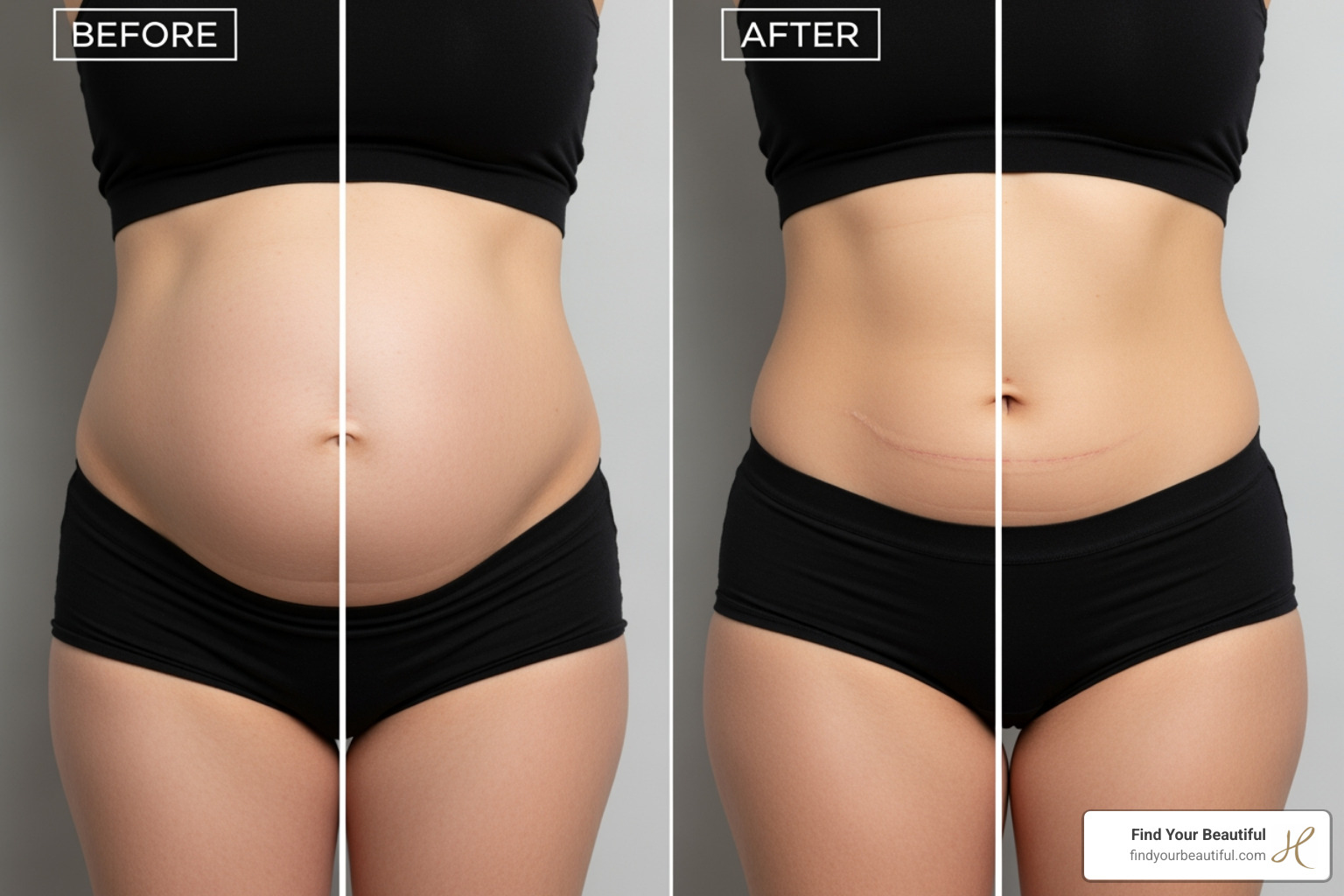
Pregnancy is a beautiful journey, but it often leaves lasting changes to the body that diet and exercise alone can’t fix. The abdominal skin can stretch significantly, and the underlying muscles may separate, a condition known as diastasis recti. This muscle separation can lead to a persistent belly pooch, core weakness, and even back pain.
A tummy tuck is an excellent solution for women seeking to repair these issues. During the procedure, we remove excess loose skin and stretch marks, particularly those below the belly button. More importantly, we repair the separated abdominal muscles by stitching them back together, restoring core strength and flattening the abdominal profile. This not only improves the aesthetic appearance but can also alleviate back pain and improve posture.
It is strongly recommended that you wait until you are finished having children before undergoing a tummy tuck. While the procedure does not prohibit future pregnancies, the physical changes associated with another pregnancy can stretch the skin and muscles again, potentially compromising your surgical results and requiring future revisions. If you’ve already experienced abdominal muscle splitting during a previous pregnancy, there’s a good chance it will happen again if you have another child after a tummy tuck. If you are breastfeeding, we recommend waiting at least 6 months after weaning before considering a tummy tuck.
After Major Weight Loss: Addressing Excess Skin
Losing a significant amount of weight is a huge accomplishment, a testament to your dedication and hard work. However, this journey often leaves behind loose, sagging skin that can cause physical discomfort, hygiene issues, and make it difficult to fully enjoy your new, healthier physique. This excess skin, sometimes referred to as a “pannus” or “apron” of skin, can hang over the pubic area or thighs.
A tummy tuck can be the final, crucial step in your weight loss change. The procedure removes this excess skin, which diet and exercise cannot eliminate, creating a smoother, firmer abdominal contour. Men and women alike find that addressing this skin laxity can significantly boost confidence and improve their quality of life. For some, a large pannus can even make exercise difficult, creating a cycle that’s hard to break. Removing this excess skin can provide the freedom and confidence needed to engage more actively in physical activities.
If you’ve undergone bariatric surgery (like gastric bypass or gastric sleeve), we generally recommend waiting to undergo a tummy tuck until your weight has been stable for 6 months to 2 years post-surgery. This allows your body to fully stabilize and ensures the best possible outcome. You can learn more about plastic surgery options after major weight loss by reading our guide: Plastic Surgery After Major Weight Loss: What You Should Know.
Understanding Your Options: How to Qualify for a Tummy Tuck Procedure Type
Not all tummy tucks are the same. The type of procedure you qualify for depends on the specific nature and extent of your concerns, as well as your unique anatomy. During your consultation, we will determine the best approach for you, custom to your goals and body. We have a Tummy Tuck Gallery where you can see some of the beautiful results we’ve achieved for our patients.
Full Tummy Tuck vs. What is a Mini Tummy Tuck?
One of the most common questions we hear is whether a “mini” or “full” procedure is needed. The answer lies in where the excess skin and muscle laxity are located.
Mini Tummy Tuck Candidacy:
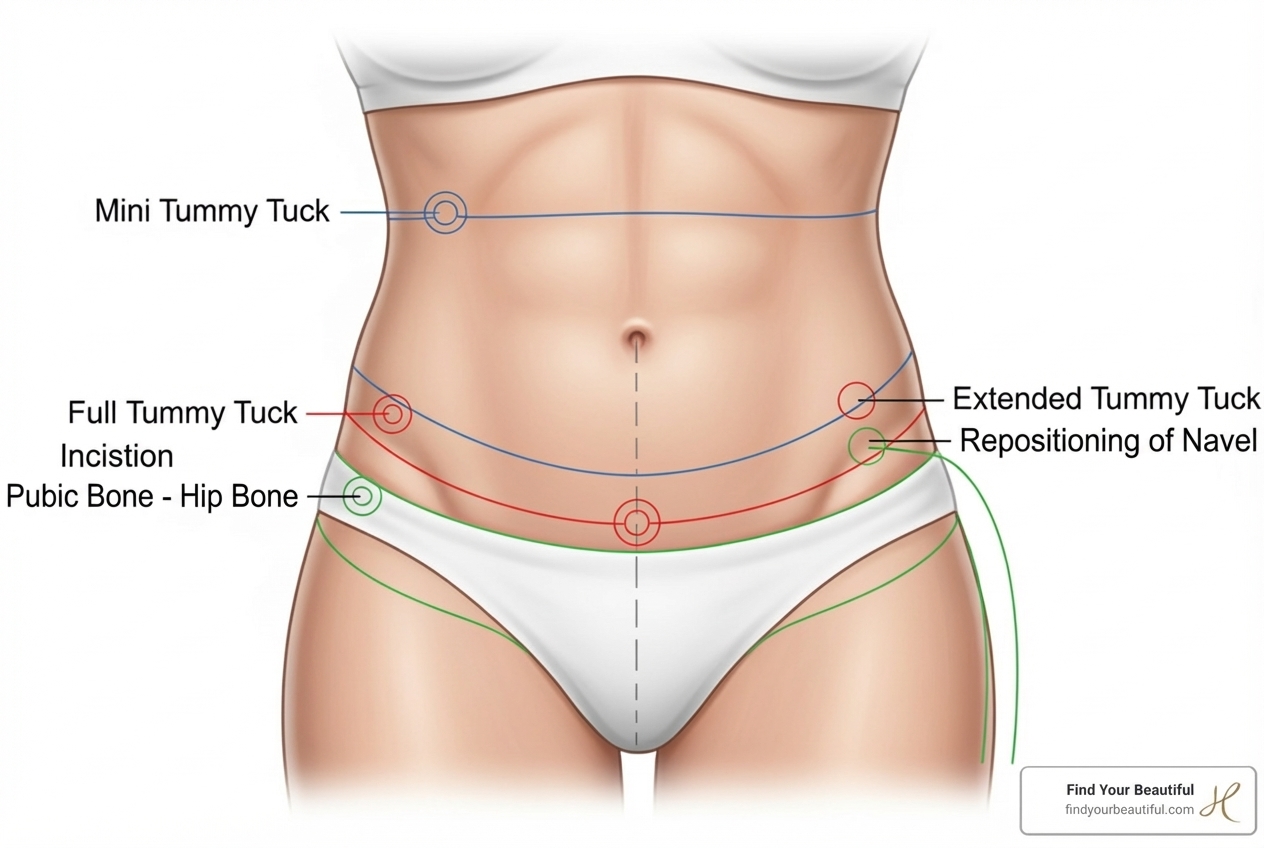
A mini tummy tuck is a less extensive procedure, ideal for individuals with only a small amount of loose skin and mild muscle laxity primarily below the belly button. It involves a shorter incision, usually just above the pubic mound, and typically does not require repositioning the belly button. Recovery is often quicker (around 2-4 weeks). If your main concern is a small “pooch” or mild sagging in the lower abdomen, you might qualify for this option.
Full Tummy Tuck Candidacy:
A full tummy tuck, also known as a standard abdominoplasty, addresses concerns across the entire abdominal wall – both above and below the belly button. This procedure involves a longer incision from hip bone to hip bone, and often an additional incision around the navel to reposition it for a natural look. It is designed for patients with significant excess skin, more pronounced stretch marks, and moderate to severe diastasis recti (separated abdominal muscles) that require extensive tightening. The full procedure creates a dramatically flatter and firmer abdominal profile. Recovery typically takes about 4-6 weeks. Understanding how to qualify for a tummy tuck of this type means recognizing that you have concerns that extend beyond just the lower abdomen.
Advanced Procedures and Combination Treatments
For patients with more extensive skin laxity, particularly those who have undergone massive weight loss, more advanced techniques may be required. These procedures address a wider area of the body for a more comprehensive change.
Extended Tummy Tuck Candidacy:
An extended tummy tuck is suitable for individuals with significant excess skin not only on the abdomen but also extending to the flanks and lower back. This procedure involves a longer horizontal incision that extends past the hipbones and towards the back. It’s often chosen by patients who have experienced substantial weight loss or multiple pregnancies, as it can remove sagging skin from the front and sides of the body, creating a smoother contour around the entire midsection.
Circumferential Tummy Tuck (Body Lift) Candidacy:
For those with massive weight loss, where excess skin encircles the entire torso, a circumferential tummy tuck (also known as a body lift) might be the most appropriate solution. This procedure involves an incision that goes all the way around the hips and back, allowing us to remove excess skin from the abdomen, hips, lower back, and buttocks, often lifting these areas simultaneously. This provides the most dramatic contouring for extensive skin laxity.
Often, a tummy tuck is combined with other procedures for a more comprehensive and harmonious result. For example, Liposuction is frequently performed alongside a tummy tuck to remove stubborn fat pockets, especially along the waistline, enhancing the overall contour and contributing to an “hourglass” shape. For patients with loose, sagging skin, stretch marks, and a belly pooch that cannot be controlled by diet and exercise, a combination of Liposuction 360 and a tummy tuck is often recommended for optimal results.
The Final Step: Consultation and Setting Expectations
The only definitive way to know for sure if you qualify for a tummy tuck is to meet with a board-certified plastic surgeon. This consultation is a crucial step for a thorough physical evaluation and an in-depth discussion of your aesthetic goals, the procedure itself, and the recovery process.
During your consultation, we will review your complete medical history, including any current and past health conditions, medications, and previous surgeries. We’ll also conduct a physical exam of your abdomen to assess the amount of excess skin, the degree of muscle separation (diastasis recti), and the quality of your skin. This allows us to understand your unique anatomy and recommend the most suitable procedure.
We encourage you to openly discuss your expectations and desired outcomes. This is your opportunity to ask questions, view before-and-after photos of patients with similar body types, and gain a clear understanding of what a tummy tuck can achieve for you. Choosing the right surgeon is paramount for a safe and successful outcome. Our guide on Choosing the Right Plastic Surgeon: What to Look For and What to Avoid can help you prepare for this important decision.
Why Realistic Expectations Are Part of How to Qualify for a Tummy Tuck
A successful outcome isn’t just about the surgeon’s skill; it’s also about having a clear and realistic understanding of what the surgery can and cannot achieve. A tummy tuck is a powerful tool for body contouring, but it has its limitations.
Firstly, a tummy tuck is not a weight loss tool. While removing excess skin and some fat may result in a few pounds lost (rarely as much as 10-12 pounds), its primary purpose is to reshape the abdomen. Patients must be at or near their ideal weight before surgery.
Secondly, you should expect permanent scarring. While we carefully place incisions to be as inconspicuous as possible (often below the bikini line), scars are an inevitable part of any surgery. They will fade over time, but complete healing and scar maturation can take up to 18 months.
Thirdly, results are gradual. While you’ll see an immediate improvement, swelling will be present for several weeks, and the final contours will emerge over several months. Full tummy tuck results can take at least 6 months to fully manifest.
Finally, maintaining your results requires a commitment to a healthy lifestyle. Significant weight fluctuations or future pregnancies can diminish the positive outcome. We always emphasize that the results of a tummy tuck are usually long-lasting if you maintain a stable weight. For a comprehensive overview of what to expect, the Mayo Clinic provides excellent information on Tummy tuck – Mayo Clinic.
Understanding the realities of recovery is also crucial. A tummy tuck requires about 4 weeks of recovery time, with restrictions on lifting and strenuous activity. You’ll need to wear a compression garment for about 6 weeks to manage swelling and support healing. Our article on The Realities of Recovery: What to Expect After Cosmetic Surgery offers more detailed insights.
Frequently Asked Questions about Tummy Tuck Candidacy
Does insurance ever cover a tummy tuck?
A tummy tuck is typically considered an elective cosmetic procedure and, as such, is generally not covered by insurance. However, in rare cases, if a large overhanging “apron” of skin (pannus) causes significant medical issues such as chronic rashes, skin infections, or interferes with daily activities or hygiene, a panniculectomy (the surgical removal of the pannus only) may be deemed medically necessary. In such instances, a portion of the cost might be covered by insurance. This is evaluated on a case-by-case basis and usually requires extensive documentation from your primary care physician and dermatologist.
How long is the recovery, and does that affect my candidacy?
Yes, your ability to commit to and manage the recovery process is absolutely part of how to qualify for a tummy tuck. Recovery typically requires about 4 to 6 weeks off from work and strenuous physical activities. You will experience soreness, swelling, and tightness in the abdomen for the first 1-2 weeks. Most patients gradually return to normal activity between 8-12 weeks, with strenuous exercise delayed until cleared by the surgeon.
It’s essential that you can arrange for this necessary downtime to ensure safe and optimal healing. This means securing help with childcare, household chores, and transportation during the initial weeks. If your job involves heavy lifting or strenuous activity, you’ll need to plan for a longer period off work. Your commitment to following post-operative instructions, including wearing a compression garment for about 6 weeks and avoiding certain movements, is vital for achieving the best possible results and minimizing complications.
Can I get a tummy tuck if I plan to have more children?
It is strongly recommended that you wait until you are finished having children before undergoing a tummy tuck. While a tummy tuck does not prevent future pregnancies, the physical changes of pregnancy—including significant weight gain, stretching of the abdominal skin, and potential re-separation of the abdominal muscles (diastasis recti)—will likely compromise your surgical results. This could undo the aesthetic improvements and necessitate further corrective surgery in the future. To protect your investment in the procedure and ensure long-lasting results, we advise waiting until your family is complete.
Your Path to a More Confident You
How to qualify for a tummy tuck involves a thoughtful combination of factors: being in good physical health, maintaining a stable weight, having specific physical concerns like loose skin or separated muscles that diet and exercise can’t resolve, and holding realistic expectations for the outcome. It’s a journey toward a more confident you, and we are here to guide you every step of the way.
The final determination of your candidacy is always made during a one-on-one consultation with an expert board-certified plastic surgeon. At Find Your Beautiful, our dedicated and experienced surgeons in San Antonio, TX, are committed to helping you achieve your aesthetic goals safely and effectively, providing personalized care and natural-looking results. We invite you to take the first step towards changing your confidence.
Learn more about our Tummy Tuck services and schedule your consultation today.