Choosing the Right Tummy Tuck: Understanding Your Options
Deciding between an extended tummy tuck vs regular is a key step when considering abdominoplasty. After pregnancy or significant weight loss, many people are left with loose skin and stubborn fat that diet and exercise can’t fix. As one patient noted, “Living your life feeling more comfortable in your skin… is priceless.”
Here’s a quick comparison:
| Aspect | Regular Tummy Tuck | Extended Tummy Tuck |
|---|---|---|
| Treatment Area | Front of abdomen only | Abdomen, flanks, and lower back |
| Incision Length | Hip-to-hip across lower abdomen | Extends around hips to lower back |
| Best For | Post-pregnancy loose skin | Massive weight loss with excess skin |
| Recovery Time | 1-6 weeks short-term | 2-12 weeks short-term |
| Cost Range | $4,000-$9,000 | $6,000-$15,000 |
The main difference is scope. A regular tummy tuck focuses on the front of your abdomen. An extended tummy tuck provides a more 360-degree body contouring approach, wrapping around your sides to address flanks and the lower back. Choosing the right procedure is essential for achieving your goals.
I’m Dr. Thomas Jeneby, and with over 19 years of experience in body contouring, I’ve helped thousands of patients steer the extended tummy tuck vs regular decision. This guide will provide the information you need to make an informed choice.

For more information, explore these resources:
What is a Tummy Tuck? Defining the Regular and Extended Procedures
A tummy tuck, or abdominoplasty, is a surgical procedure designed to restore a firmer, smoother, and more toned appearance to your midsection. It addresses concerns like loose skin and weakened muscles that remain after pregnancy, weight loss, or aging and don’t respond to diet and exercise.
The procedure removes excess skin and fat while tightening weakened or separated abdominal muscles. A tummy tuck is a body contouring procedure, not a weight-loss solution. It’s most effective when you are at or near your ideal weight, serving as a finishing touch to your health journey.
For more details on how abdominoplasty fits into overall body contouring, explore our insights on Beyond the belly tuck: Everything you need to know about abdominal contouring.
The Standard (Regular) Tummy Tuck
The standard tummy tuck is the most common version, focusing on the front of your abdomen. A horizontal incision is made from hip to hip, low enough to be hidden by underwear. A second incision is made around the navel.
Through these incisions, the surgeon removes excess skin and fat and repairs separated abdominal muscles (a condition called diastasis recti). This muscle tightening is key to creating a flatter abdominal wall that exercise alone often can’t achieve. The remaining skin is then pulled taut, and the belly button is repositioned to a natural-looking location. The result is a smoother, more toned midsection.
This procedure is ideal for those with moderate loose skin and muscle separation, often after pregnancy. The average cost is around $6,092, with a general range of $4,000 to $9,000.
The Extended Tummy Tuck
When comparing extended tummy tuck vs regular procedures, the difference is scope. An extended tummy tuck, or circumferential abdominoplasty, targets the abdomen, flanks (“love handles”), and lower back. It’s designed for patients with significant excess skin around their entire lower torso, which is common after massive weight loss.
The incision is more extensive, starting like a standard tummy tuck but continuing around the hips to the lower back. This allows for the removal of a much larger amount of skin and fat, creating a dramatically improved waistline and lower back contour. The results can be transformative, with one 2012 study showing extremely high patient satisfaction.
Due to its complexity, an extended tummy tuck involves a longer recovery and a higher cost, typically ranging from $6,000 to $15,000. For patients with circumferential concerns, it is often the best option for comprehensive results.
Extended Tummy Tuck vs Regular: A Detailed Comparison
Choosing between an extended tummy tuck vs regular procedure means deciding on the scope of your body contouring. Both can be transformative, but they are designed for different needs.

Scope of Treatment and Incision Differences
The primary difference is the treatment area and the resulting incision.
- A standard tummy tuck focuses on the front of the abdomen. The incision runs from hip to hip, low enough to be hidden by a swimsuit. It’s ideal for removing excess skin and repairing muscles in the belly area.
- An extended tummy tuck addresses the abdomen, flanks (“love handles”), and lower back. The incision starts at the front and wraps around the sides to the back, providing a 360-degree approach to reshaping the lower torso. The longer scar is designed to follow the body’s natural contours.
Here’s a side-by-side comparison:
| Feature | Regular Tummy Tuck | Extended Tummy Tuck |
|---|---|---|
| Treatment Area | Front of abdomen (upper and lower) | Abdomen, flanks, and lower back |
| Incision Length | Hip-to-hip across lower abdomen | Extends around hips to lower back |
| Best For | Post-pregnancy loose skin and muscle separation | Massive weight loss with circumferential excess skin |
The Role of Liposuction in Abdominal Contouring
Liposuction is often combined with both extended tummy tuck vs regular procedures. While a tummy tuck removes excess skin and tightens muscles, liposuction targets stubborn fat deposits. Using them together allows for superior sculpting of the waistline, flanks, and abdomen, creating a more defined contour. This combination can also help reduce certain complications. For a deeper dive, see our guide on abdominal contouring.
A Note on the Mini Tummy Tuck
For those with concerns limited to the small “pooch” below the belly button, a mini tummy tuck is a less invasive option. It involves a shorter scar (4-8 inches), no belly button repositioning, and a quicker recovery. However, its results are limited to the lower abdomen. It’s a great choice for the right candidate with good skin elasticity and minimal loose skin. Learn more in our explanation: What is a mini tummy tuck?
Candidacy, Recovery, and Results
Understanding candidacy, recovery, and results is key to choosing between an extended tummy tuck vs regular procedure and ensuring your satisfaction.
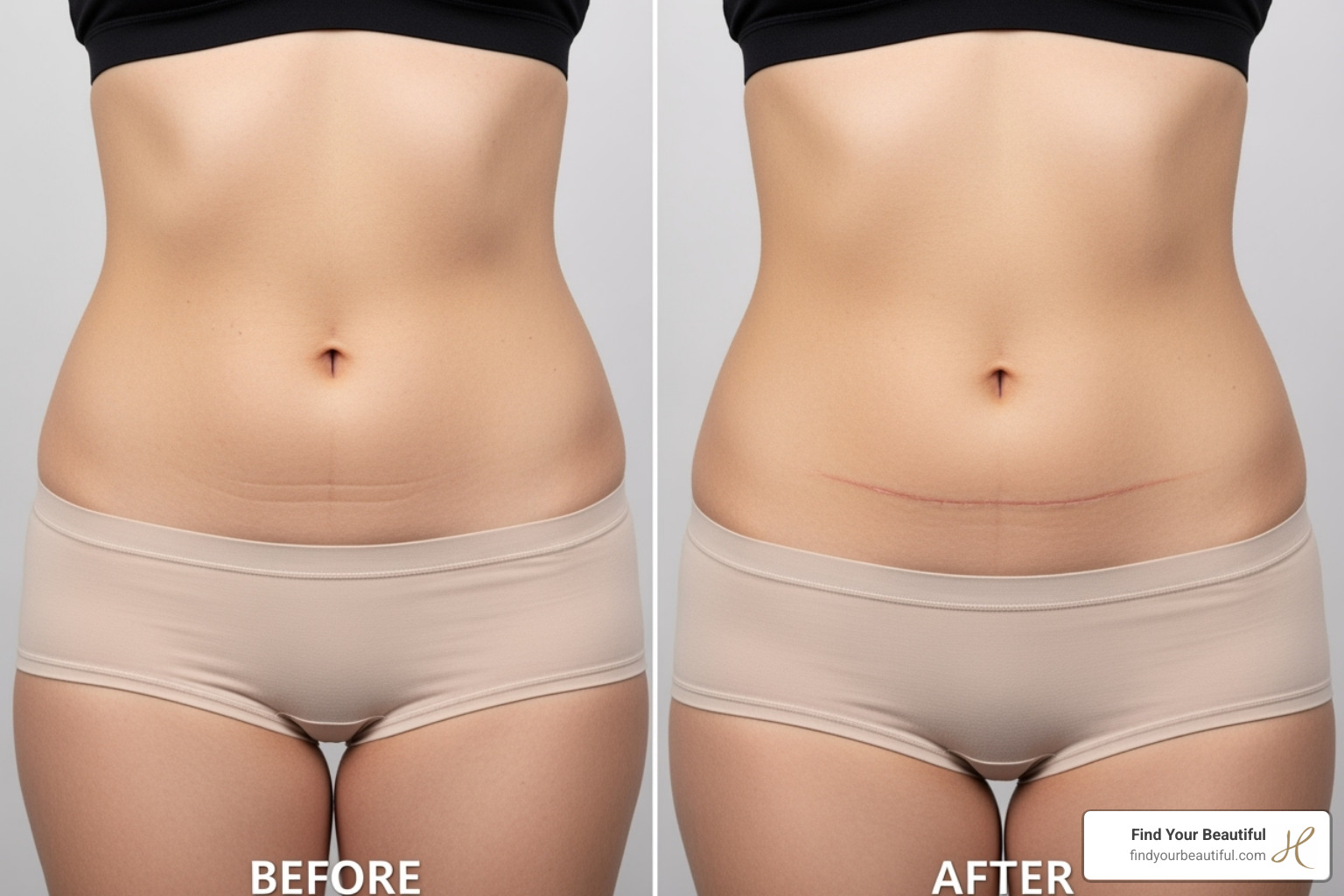
You can view more of our patients’ changes in our tummy tuck gallery.
Ideal Candidates: Extended Tummy Tuck vs Regular
Good candidates for any tummy tuck are at a stable weight, are non-smokers in good overall health, and have realistic expectations. The choice between procedures depends on your specific body challenges.
- A standard tummy tuck is ideal for patients with moderate loose skin and fat on the front of the abdomen, common after pregnancy or moderate weight loss.
- An extended tummy tuck is for those with significant excess skin and fat that wraps around the flanks and lower back. This is often needed after massive weight loss (100+ pounds) for a circumferential improvement.
A consultation with a board-certified plastic surgeon is necessary to assess your skin laxity and determine the best approach.
Recovery Timelines: Extended Tummy Tuck vs Regular
Recovery time is a practical difference in the extended tummy tuck vs regular comparison. You’ll wear compression garments and may have surgical drains after either procedure.
- Standard Tummy Tuck Recovery: Short-term recovery is 1-6 weeks. Most patients return to desk work in 2-4 weeks and can resume strenuous exercise after 6 weeks. Scars fade and flatten over several months, with full maturation taking about a year.
- Extended Tummy Tuck Recovery: This requires more patience, with short-term downtime from 2-12 weeks. Most need 4-6 weeks before returning to work and up to 12 weeks before resuming intense workouts. Swelling and discomfort are more widespread due to the larger treatment area. Full results and scar maturation can take up to a year.
Following your surgeon’s post-operative instructions is crucial for optimal healing. Learn more about the realities of recovery after cosmetic surgery.
Potential Risks and Complications
Both procedures carry surgical risks. Common complications include seroma (fluid collection, often managed with drains), infection, bleeding, and temporary numbness. Scarring is inevitable, though surgeons aim to make incisions as discreet as possible. Serious but rare complications include blood clots and risks associated with anesthesia.
Choosing an experienced, board-certified plastic surgeon significantly reduces these risks. For a complete discussion, visit our page on abdominoplasty risks and complications.
Comparing Costs and Making Your Decision
Understanding the financial commitment is essential when weighing an extended tummy tuck vs regular procedure. Costs vary based on surgeon’s fees, anesthesia, facility fees, and the complexity of the surgery.
According to the American Society of Plastic Surgeons, the average cost was $6,092 in 2019, with a general cost range between $4,000 and $18,000.
- Regular Tummy Tuck Cost: Typically ranges from $4,000 to $9,000.
- Extended Tummy Tuck Cost: Generally falls between $6,000 and $15,000 due to longer surgical time and a larger treatment area.
Tummy tucks are usually considered cosmetic and not covered by insurance. However, a panniculectomy (skin removal for medical reasons like rashes or infections) may be partially covered. During your consultation, we provide a detailed, itemized quote with no hidden fees.
Factors Influencing Your Choice
Beyond cost, your decision between an extended tummy tuck vs regular procedure should be guided by personal factors:
- Amount and Location of Excess Skin: Is it confined to the front of your abdomen (regular) or does it wrap around your flanks and back (extended)?
- Location of Excess Fat: Where are your stubborn fat deposits? This helps determine if liposuction should be combined and which tummy tuck is appropriate.
- Personal Aesthetic Goals: Are you seeking a flatter front profile or a more comprehensive, 360-degree contour?
- Recovery Time Commitment: An extended tummy tuck requires a longer recovery. Be realistic about the downtime your lifestyle can accommodate.
A tummy tuck can significantly improve your quality of life. Explore the 5 reasons to get a tummy tuck to understand the full benefits.
Preparing for Your Consultation
A consultation with a board-certified plastic surgeon is the most important step. Come prepared to discuss your goals and medical history. Ask questions about:
- Which procedure is recommended for you and why.
- Incision location and expected scarring.
- Potential risks and recovery details.
- The total, all-inclusive cost.
We will perform a physical exam, review our tummy tuck gallery photos with you, and set realistic expectations. We will also provide pre-operative instructions to ensure a smooth experience. For more tips, see our guide on preparing for your tummy tuck procedure. Making this decision is significant, and our team is here to guide you with confidence.
Frequently Asked Questions about Tummy Tucks
Here are answers to common questions about tummy tucks to help you distinguish between an extended tummy tuck vs regular procedure.
Is a tummy tuck a weight loss procedure?
No. A tummy tuck is a body contouring surgery, not a weight loss method. It is designed to remove excess skin and tighten muscles after you have reached a stable, ideal weight. The goal is to reshape the midsection, not to lower the number on the scale. For best results, complete your weight loss journey before considering a tummy tuck.
Will a tummy tuck get rid of stretch marks?
Partially. A tummy tuck will only remove stretch marks located on the excess skin that is surgically excised, which is typically the skin on the lower abdomen below the belly button. Stretch marks on the upper abdomen or flanks will likely remain. During your consultation, your surgeon can assess which stretch marks may be removed.
How long do tummy tuck results last?
Tummy tuck results are long-lasting, often permanent. The removed skin will not grow back, and the tightened muscles will remain firm. However, significant weight fluctuations or future pregnancies can stretch the skin and muscles again, altering your results. Maintaining a stable weight through a healthy diet and regular exercise is the key to preserving your new contour for years to come.
Your Path to a More Confident You
Choosing between an extended tummy tuck vs regular tummy tuck is a personal decision that aligns with your unique body and goals. This guide has outlined the key differences to help you make an informed choice.
A regular tummy tuck is perfect for post-pregnancy or moderate weight loss concerns focused on the front of the abdomen. An extended tummy tuck offers a comprehensive, 360-degree approach for those with circumferential skin laxity, often after massive weight loss.
Factors like treatment scope, recovery time, and cost vary, but the right choice depends on your desired outcome. There is no one-size-fits-all answer, which is why a personalized consultation is crucial.
At Find Your Beautiful, our board-certified plastic surgeons listen to your concerns and create a customized plan. We are here to guide you with expert care and support as you work to achieve beautiful, natural results.
You deserve to feel confident in your skin. If you’re ready to address loose skin and complete your body contouring journey, we are here to help.
Ready to start your journey? Learn more about our Tummy Tuck services and schedule your consultation today. Let’s work together to help you find your beautiful.