The Challenge That Follows Weight Loss Success
Congratulations on your incredible weight loss journey! While you’ve achieved something remarkable, you might now face an unexpected challenge: loose skin after weight loss that doesn’t seem to bounce back.
Quick Solutions for Loose Skin After Weight Loss:
- Mild laxity: Strength training, proper nutrition, hydration, and non-surgical treatments
- Moderate laxity: Professional skin tightening procedures like radiofrequency or ultrasound
- Severe laxity: Body contouring surgery for permanent removal of excess skin
- Timeline: Wait 6+ months after weight stabilization before considering surgical options
- Key factors: Amount lost (100+ lbs increases risk), age, genetics, and speed of loss
You’re not alone. Studies show that losing 100 pounds or more often results in loose skin, with 44% of people seeking plastic surgery for it reporting physical discomfort, pain, or infections from excess skin folds.
The good news is that proven solutions, from lifestyle changes to advanced medical treatments, can help you complete your change and feel confident.
I’m Dr. Thomas Jeneby, a board-certified plastic surgeon with over 20 years of experience and 9,000+ procedures. At Find Your Beautiful in San Antonio, my team and I specialize in body contouring to address loose skin after weight loss, helping patients complete their journey with personalized plans for natural-looking results.
Understanding Why Skin Loosens After Weight Loss
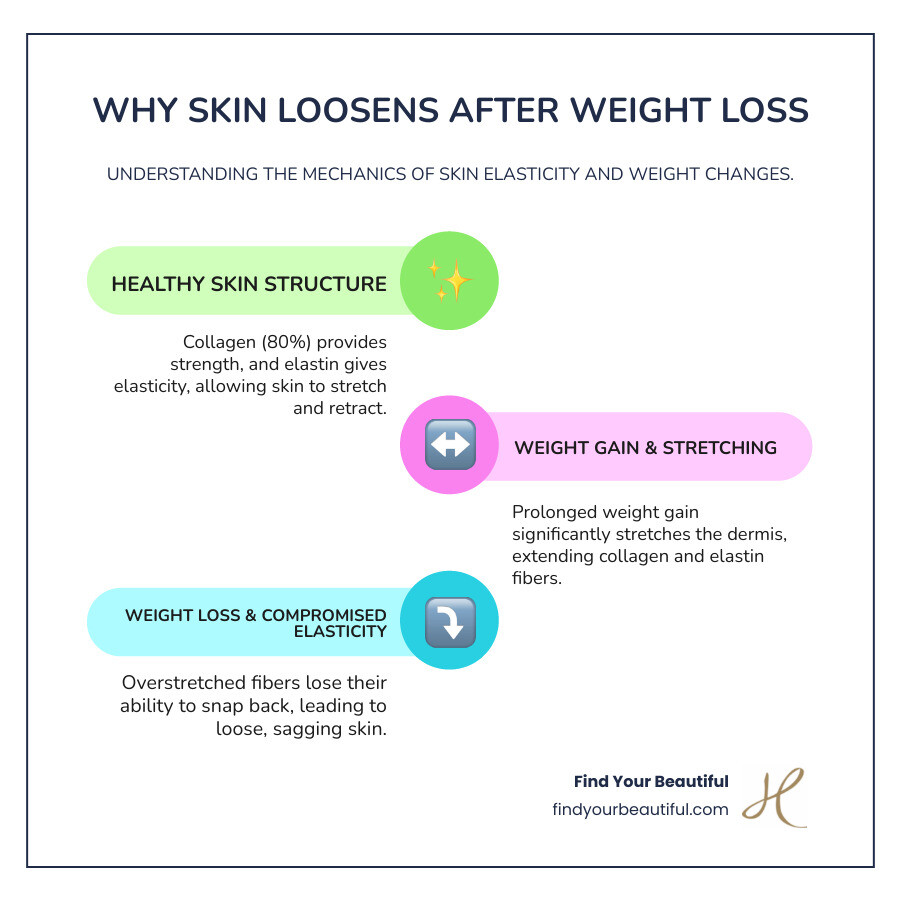
Your skin is your body’s largest organ, designed to stretch and adapt. However, when stretched significantly for a long time due to weight gain, it can lose its ability to bounce back, leading to loose skin after weight loss.
Skin elasticity depends on two proteins in the dermis: collagen and elastin. Collagen provides structure and strength (making up 80% of your skin’s framework), while elastin allows it to stretch and snap back. When skin is stretched for long periods, these collagen and elastin fibers get damaged, as research shows. After weight loss, the damaged fibers can’t retract the skin, causing it to hang loosely.
In contrast, skin stretched during pregnancy usually bounces back within months because the stretching is less severe and for a shorter duration than years of being overweight. Additionally, people who undergo major weight loss often form less new collagen, and it’s not as strong as the collagen in younger skin, making retraction even more difficult.
Factors That Influence Skin Laxity
Not everyone experiences loose skin after weight loss in the same way. Several key factors determine how much loose skin you might have.
Amount of weight lost: Losing 100 pounds or more typically results in more loose skin, as the skin was stretched further.
Duration of excess weight: The longer skin is stretched, the more collagen and elastin fibers are strained, reducing their ability to snap back.
Age: Older skin produces less collagen and elastin, so it has less recovery ability than younger skin.
Genetics: Some people are genetically predisposed to have more elastic skin.
Sun exposure: Chronic sun damage reduces collagen and elastin production, hindering skin’s ability to tighten.
Smoking: Smoking reduces collagen production and damages existing collagen, making sagging skin more likely.
Speed of weight loss: Rapid weight loss doesn’t give skin enough time to adapt and shrink. Gradual loss of 1-2 pounds per week is recommended.
The Physical and Emotional Impact of Excess Skin
While a major achievement, significant weight loss can lead to excess skin, creating challenges that go beyond appearance. The physical discomfort is real and can interfere with daily life.
Skin folds can cause painful chafing, rashes, and infections like intertrigo, as they create warm, moist environments for bacteria and fungi. A sobering statistic shows 44% of people seeking surgery for loose skin reported pain, ulcers, or infections, highlighting that these are often medical, not just cosmetic, issues.
Frustratingly, excess skin can interfere with exercise, making movement uncomfortable and hindering efforts to maintain a healthy, active lifestyle.
The emotional impact is also significant. Despite the hard work, loose skin can be a constant reminder of past weight, often leading to negative body image and self-esteem issues. Even after a major health achievement, many feel self-conscious, as clothes may not fit right and the expected confidence boost feels incomplete.
Understanding these challenges helps explain why addressing loose skin after weight loss often becomes a crucial final step in someone’s change. It’s not vanity—it’s about completing the journey to an improved quality of life and genuine self-confidence.
Lifestyle Strategies to Improve Skin Appearance
While lifestyle changes can’t reverse severe skin laxity, they can significantly improve your skin’s appearance and health. These strategies build a strong foundation from the inside out to help with loose skin after weight loss. They work best for mild to moderate laxity, with gradual improvements. Every positive change supports your skin’s natural healing.
The Role of Strength Training
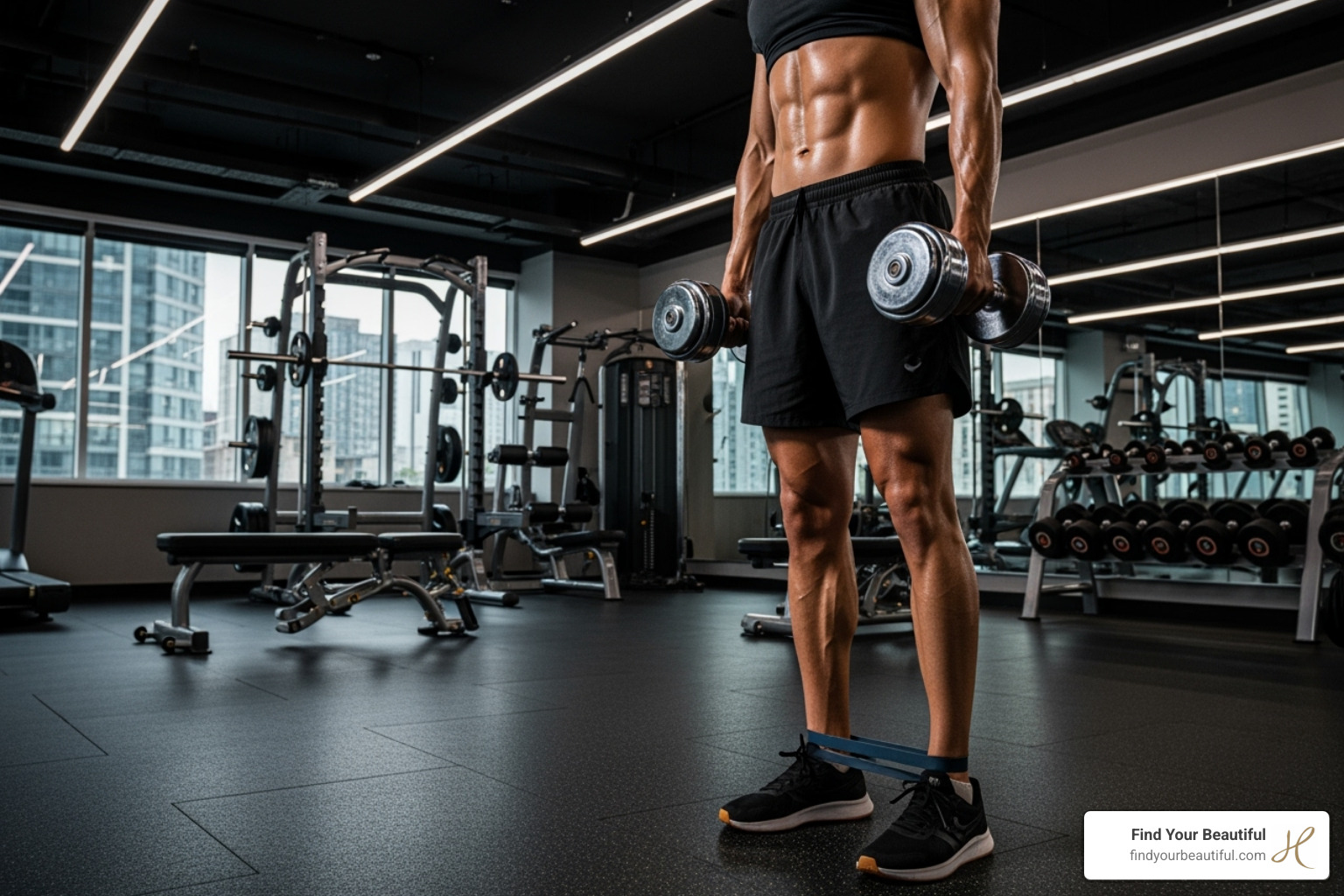
Strength training is one of the most effective ways to improve the appearance of loose skin after weight loss. When you lose weight, you also lose muscle. Building muscle mass through strength training helps fill the space under the skin, creating a firmer, more contoured appearance. Research shows strength training effectively builds muscle, and some studies suggest it may also improve skin’s elasticity. Focus on targeted exercises for your arms, abdomen, and thighs. Aim for 2-3 sessions per week, allowing for muscle recovery.
Nutrition and Hydration for Better Skin Elasticity
Proper nutrition and hydration provide the raw materials your skin needs to heal and maintain elasticity.
- Protein is crucial for building collagen and elastin. Eat lean sources like chicken, fish, eggs, and legumes.
- Vitamin C is essential for collagen synthesis and acts as a protective antioxidant. Find it in citrus fruits, berries, and bell peppers.
- Omega-3 fatty acids (from salmon, flaxseeds) can increase skin elasticity.
- Hydration is vital. A study showed increased water intake improves skin hydration and function. Aim for 2.5 to 3 liters daily.
- Firming creams with retinoids can help, but building collagen from within through nutrition is more effective, as topical collagen molecules are too large to penetrate the skin.
At-Home Remedies for Mild Loose Skin After Weight Loss
For mild loose skin, these practical at-home remedies can improve comfort and confidence.
- Compression clothing provides immediate support, prevents chafing, and can make exercise more comfortable.
- Moisturizers with hyaluronic acid help plump the skin by attracting and holding water, increasing firmness.
- Sun protection (SPF 30+) is non-negotiable, as sun exposure breaks down collagen and elastin.
- Avoid smoking and limit alcohol. Smoking damages collagen, and alcohol dehydrates the skin, undermining your efforts.
These strategies work best when combined to support your overall skin health and give your body the best chance to heal and tighten naturally.
Professional Solutions for Significant Loose Skin After Weight Loss
After losing 100 pounds or more, lifestyle changes may not be enough to address significant loose skin after weight loss. This is normal, and professional solutions can help you complete your change.

Timing is key. Your weight should be stable for at least six months before any procedure to ensure the best results. A consultation with a board-certified plastic surgeon can help you create a personalized plan.
Non-Surgical Skin Tightening Options
For mild to moderate laxity, or if you’re not ready for surgery, non-surgical treatments offer a gentler path. They work by stimulating new collagen production to gradually tighten skin.
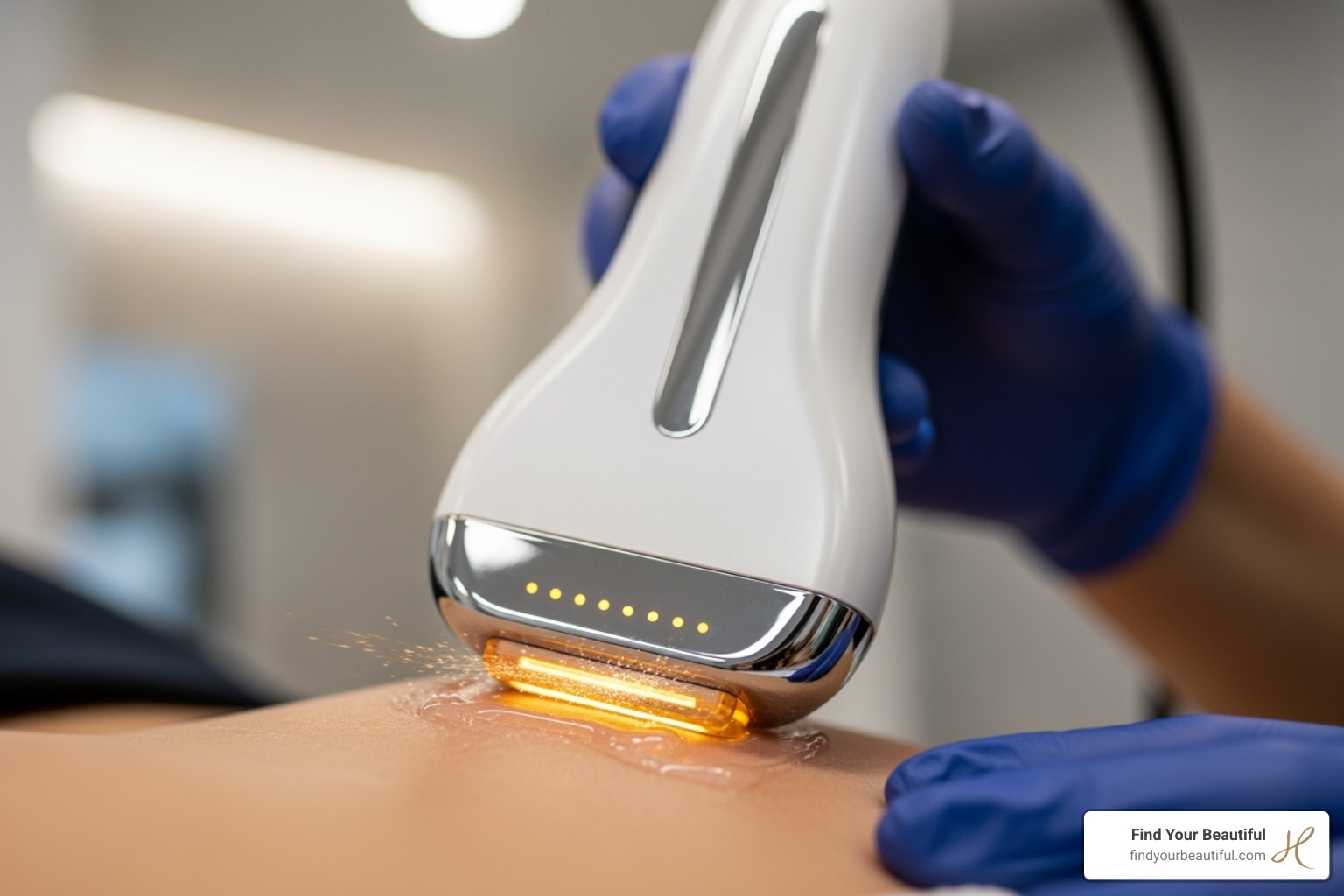
- Radiofrequency (RF) treatments use controlled heat to contract existing collagen and stimulate new growth. Research shows RF combinations can effectively reduce loose skin. At Find Your Beautiful, we offer advanced RF treatments. Learn more about our non-surgical skin tightening services here.
- Ultrasound therapy (HIFU) delivers targeted energy to promote collagen rebuilding. While studies show it may not dramatically improve severe cases, many patients report significant relief from discomfort.
- Renuvion J-Plasma is an innovative treatment combining RF energy with helium plasma to tighten skin from underneath. It’s often used with liposuction for remarkable results. Learn more about what Renuvion is and how it works.
Surgical Options for Severe Loose Skin After Weight Loss
For significant excess skin, especially after losing 100+ pounds, surgical body contouring offers the most dramatic, lasting solution. These procedures remove excess skin and fat while reshaping underlying tissue. For many, surgery is the final step after major weight loss. At Find Your Beautiful, we offer a range of custom body contouring procedures. Explore our guide to plastic surgery after major weight loss to learn more.
- Tummy tucks remove excess abdominal skin and fat, tighten muscles, and reposition the belly button for a firmer midsection. Incisions are placed to be concealed by swimwear. Explore our Tummy Tuck services.
- Arm lifts target “bat wings” by removing excess skin and fat from the upper arms. The incision runs along the inner arm and is placed to be inconspicuous.
- Thigh lifts remove excess skin and fat from the inner and outer thighs to create smoother contours and reduce chafing. Incisions are placed to be inconspicuous.
- Lower body lifts are a comprehensive procedure addressing the abdomen, flanks, back, buttocks, and thighs to dramatically improve overall body contour.
- Breast lifts restore a youthful breast position after weight loss. Incision patterns vary to minimize scarring.
- Panniculectomy removes the hanging “apron” of skin and fat. It is often medically necessary to resolve hygiene issues, rashes, and infections.
- Liposuction often complements these procedures by removing residual fat deposits.
Recovery and What to Expect After Surgery
Understanding the recovery process is crucial. Knowing what to expect from body contouring surgery can ease concerns and help you plan.
- Hospital stay is typically one to four days. Our team will monitor you closely for comfort and safety.
- Recovery at home takes two to four weeks for most daily activities, with full results visible after several months.
- Compression garments are worn for six to eight weeks post-surgery to reduce swelling and support healing.
- Scar management is key. We plan incisions to be inconspicuous and provide detailed scar care instructions. Scars are a trade-off for removing excess skin, an exchange most patients find worthwhile.
- Potential risks exist with any surgery, but serious complications are rare with experienced, board-certified surgeons. We will discuss all risks during your consultation.
The good news is that body-contouring surgery generally improves quality of life after major weight loss. Most patients report less discomfort and dramatically improved self-esteem. Learn more about the realities of recovery and what to expect after cosmetic surgery.
Frequently Asked Questions about Loose Skin
Patients often ask the same questions about loose skin after weight loss. Here are answers to the most common ones, based on my experience.
How much weight loss causes loose skin?
There’s no magic number, as several factors contribute to loose skin. Weight loss of 100 pounds or more is a common benchmark for significant loose skin, but it varies greatly from person to person. Key factors include the duration of excess weight, age, genetics, and the speed of weight loss. Younger skin has better elasticity, and genetics play a huge role. Rapid weight loss gives skin less time to shrink compared to gradual weight loss.
Can you ever fully tighten loose skin without surgery?
For mild loose skin after weight loss, yes. A combination of strength training, proper nutrition, hydration, and non-surgical treatments can make a real difference. Building muscle fills the space under the skin, and when combined with treatments like radiofrequency or ultrasound, you can see genuine improvement.
However, it’s important to have realistic expectations. For significant excess skin, surgery is the most effective option, as non-surgical methods cannot remove large amounts of hanging skin. If you can pinch several inches of loose skin, surgery will likely be needed for dramatic results. For mild looseness, non-surgical approaches are worth trying.
When is the right time to get surgery for loose skin?
Patience and timing are crucial when considering surgery for loose skin after weight loss. Your weight must be stable for at least six months (or 18 months post-bariatric surgery). This allows your body to adjust and reveals the final amount of loose skin to be addressed.
You must also be in good overall health, be a non-smoker (or quit weeks before surgery), and have any underlying health conditions well-controlled. Most importantly, you need realistic expectations about the results, recovery process, and scarring.
Deciding if plastic surgery is right for you is a personal choice. The right time is when it feels right for you.
Complete Your Change with Confidence
Your weight loss journey is an extraordinary accomplishment. Facing the challenge of loose skin after weight loss is the final chapter, and we can help you write it with confidence.
Addressing excess skin is about more than appearance; it’s about completing your physical and emotional change. It’s natural to seek solutions when loose skin causes discomfort or affects your confidence.
Every journey is unique, which is why we offer a personalized approach at Find Your Beautiful. Some patients achieve their goals with treatments like RF Microneedling, while others may need body contouring surgery. The right path is the one that’s right for you.
Solutions exist for every situation. Whether you need non-surgical treatments for mild laxity or surgery for more extensive loose skin, we have the expertise to help you achieve natural-looking results.
We love seeing patients feel confident in their bodies. After all your hard work, you deserve to feel amazing every day.
Don’t let loose skin hold you back. Take the final step toward the confidence you’ve earned. Learn more about our RF Microneedling services and see how our personalized approach can help you complete your change.