Understanding Stomach Liposuction: Your Path to a Sculpted Midsection
Stomach liposuction is a cosmetic surgical procedure that removes stubborn fat deposits from the abdominal area to create a more contoured and defined midsection. Here’s what you need to know:
Key Facts About Stomach Liposuction:
- What it does: Permanently removes subcutaneous fat cells from the abdomen
- Best for: People with good skin elasticity and stubborn fat that won’t respond to diet and exercise
- Not for: Weight loss or removing visceral fat around organs
- Recovery: 2-6 weeks depending on technique used
- Cost: $3,000-$8,000 on average, with abdominal procedures ranging from $3,749-$14,479
- Results: Visible in 3-6 months as swelling subsides
If you’ve been struggling with a belly pooch or love handles that won’t budge despite your best efforts with diet and exercise, you’re not alone. More than 200,000 liposuction procedures happen each year in the United States, making it one of the most popular cosmetic surgeries.
But here’s the important part: stomach liposuction isn’t a weight-loss solution. It’s a body contouring procedure designed to target specific pockets of fat that resist traditional methods. The procedure can only remove subcutaneous fat – the pinchable fat just under your skin – not the visceral fat that surrounds your internal organs.
Understanding this distinction is crucial for setting realistic expectations. While liposuction can create dramatic improvements in your body’s silhouette, it works best when you’re already at or near your ideal weight and have good skin elasticity.

Are You a Candidate for Abdominal Liposuction?
Wondering if stomach liposuction is right for you? It’s not just about wanting a flatter belly – there are specific factors that make some people ideal candidates while others might benefit more from different approaches.
The truth is, stomach liposuction works best for people who are already pretty close to where they want to be weight-wise. Think of it as the finishing touch on your fitness journey, not the starting point.
Stable weight is probably the most important factor we look at. If your weight fluctuates a lot or you’re still working on losing those extra pounds, it’s better to wait. Liposuction is a contouring tool, not a weight-loss solution. Once you’ve been at a consistent weight for several months, that’s when we know you’re ready.
Good skin elasticity is another game-changer. After we remove the fat, your skin needs to bounce back and hug your new contours. Younger patients typically have better skin elasticity, but age isn’t everything – genetics and sun exposure play big roles too. If you can pinch your abdominal skin and it snaps back fairly quickly, that’s a good sign.
Being a non-smoker is non-negotiable for the best results. Smoking messes with your body’s ability to heal properly and increases your risk of complications. If you’re a smoker, we’ll ask you to quit well before your procedure – think of it as extra motivation for a healthy lifestyle change.
Your overall health matters too. We need to make sure you’re in good shape to handle surgery and recovery. Most conditions aren’t automatic disqualifiers, but we’ll discuss everything during your consultation.
Perhaps most importantly, you need realistic goals about what liposuction can achieve. It can dramatically improve your body shape and boost your confidence, but it won’t give you a completely different body type or eliminate cellulite.
Many of our patients are moms looking to reclaim their pre-pregnancy shape, especially after C-sections. We also see plenty of men and women with BMIs of 30 or less who have those stubborn fat pockets that just won’t budge no matter how many crunches they do.
Want to dive deeper into candidacy requirements? Check out our detailed guides: Are You a Candidate for Liposuction? and Knowing Whether You’re Fit For a Liposuction.
Subcutaneous vs. Visceral Fat: What Lipo Can Target
Here’s where things get really important – not all belly fat is the same, and stomach liposuction can only target one type.
Subcutaneous fat is the fat you can actually grab and pinch. It sits right under your skin and is exactly what stomach liposuction targets. When we remove these fat cells, they’re gone forever – no coming back, no moving to other areas. After a successful procedure, you’ll have up to 70% fewer fat cells in the treated area.
Visceral fat, on the other hand, lives deep inside your abdomen, wrapped around your organs. You can’t pinch it, and liposuction can’t touch it. This is the fat that creates that “beer belly” look and is actually more dangerous to your health.
Visceral fat isn’t just a cosmetic issue – it’s linked to serious health problems like insulin resistance, high blood pressure, bad cholesterol, and increased risk of heart disease and stroke. The good news? This type of fat responds beautifully to good old-fashioned diet and exercise.
So while stomach liposuction can sculpt your outer silhouette and give you those contours you’re after, maintaining a healthy lifestyle is still your best weapon against the deeper, more dangerous fat.
Addressing Specific Concerns like an ‘Apron Belly’
An “apron belly” or pannus stomach is something we see frequently, especially in women after pregnancy or people who’ve lost significant weight. It’s that hanging tissue, skin, and fat that drapes down from the abdomen – sometimes reaching the thighs or even knees.
Beyond the obvious cosmetic concerns, an apron belly can cause real physical problems. Patients tell us about chafing, skin rashes, hygiene difficulties, and even back pain from carrying the extra weight. The emotional impact can be just as significant.
Here’s the thing – no amount of sit-ups or dieting will fix an apron belly once it’s formed. The skin has been stretched beyond its ability to bounce back.
Stomach liposuction can help if your apron belly is primarily excess fat with decent skin elasticity. Removing the fat volume allows the skin to retract and improve your overall contour.
But if excess skin is the main culprit, you might need a panniculectomy to surgically remove that hanging apron of tissue. For cases involving both loose skin and separated abdominal muscles (common after pregnancy), a tummy tuck provides the most comprehensive solution.
Sometimes we recommend combining stomach liposuction with other procedures for the most dramatic change, especially after major weight loss. Every situation is unique, which is why a thorough consultation is so important.
For more insights on body contouring after significant weight changes, check out Plastic Surgery After Major Weight Loss: What You Should Know.
The Stomach Liposuction Procedure: Techniques and Alternatives
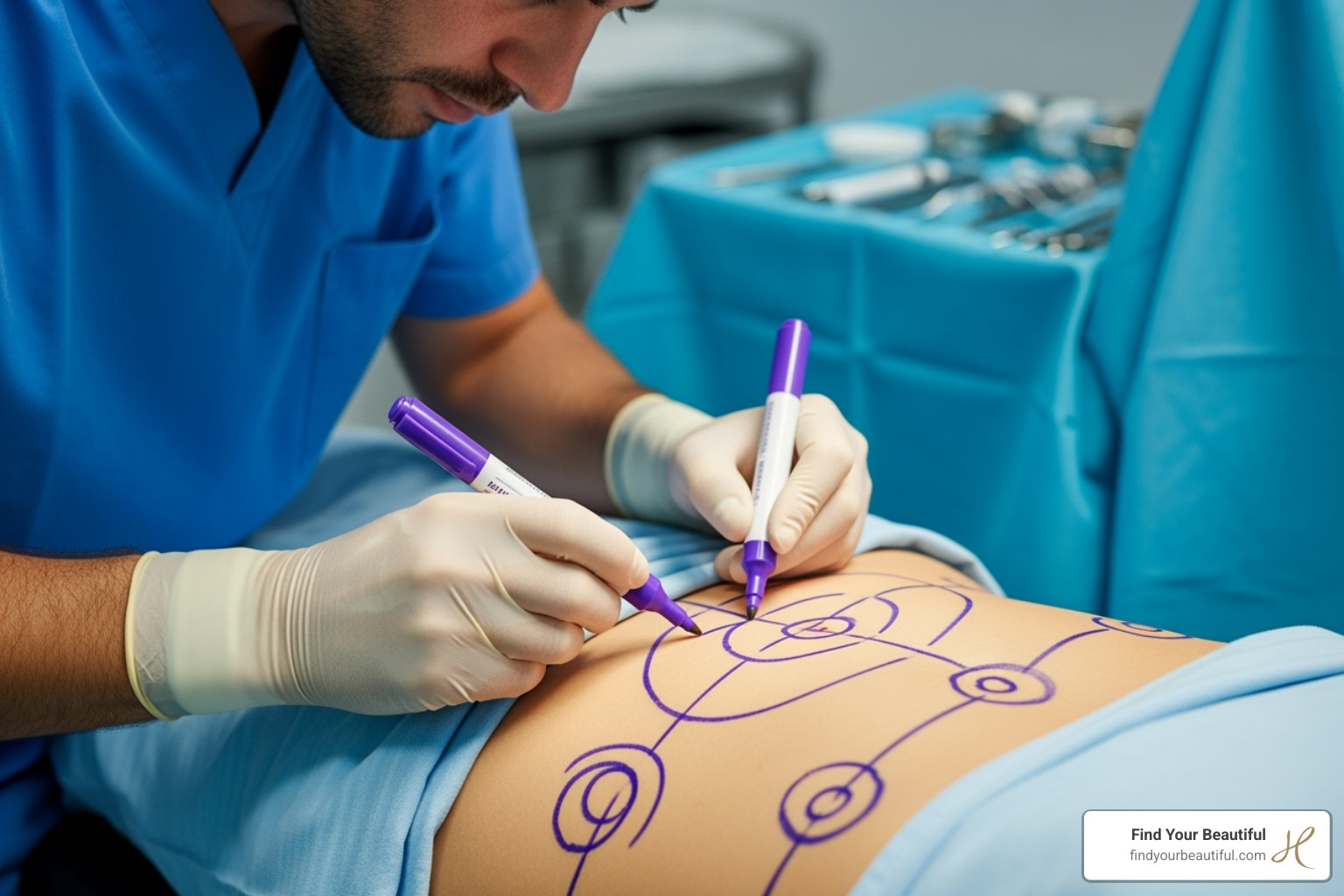
When you’re ready to take the next step with stomach liposuction, understanding your options can help you feel more confident about your decision. While the basic goal remains the same – removing stubborn fat from your midsection – we have several advanced techniques that can be custom to your specific needs and body type.
The procedure itself is more straightforward than many people imagine. We make tiny incisions, usually just a few millimeters long, strategically placed where they’ll be barely visible. Through these small openings, we insert a thin tube called a cannula that gently breaks up and removes the unwanted fat cells. Most stomach liposuction procedures take under two hours, though more extensive contouring might need a bit longer.
Tumescent liposuction is often our go-to technique because it’s both safe and effective. Before removing any fat, we inject a special solution containing saline, a numbing agent, and medication to minimize bleeding into the treatment area. This makes the fat firmer and easier to remove while keeping you comfortable throughout the procedure. Many patients love that this technique often allows us to use just local anesthesia, so you can stay awake and even chat with us during the process.
For areas with denser fat or when we’re removing larger volumes, power-assisted liposuction (PAL) can be incredibly helpful. The cannula vibrates rapidly, making it easier to break up stubborn fat cells and creating smoother, more even results.
Ultrasound-assisted liposuction (UAL) uses sound waves to liquefy fat cells before removal, which is particularly useful for fibrous areas or if you’ve had previous procedures. This technique allows for very precise contouring and often results in less trauma to surrounding tissues.
One of our most popular options is laser-assisted liposuction, including techniques like Smartlipo™. The laser energy not only melts fat cells for easier removal but also stimulates collagen production, which can help tighten your skin in the treated area. This is especially beneficial for stomach liposuction since skin tightening is often just as important as fat removal for achieving that smooth, contoured look you’re after. You can learn more about this advanced technique at Smart Lipo San Antonio TX.
Many of our patients choose to address their entire midsection with Lipo 360, which treats not just the front of your abdomen but also your flanks and sometimes your back in a single session. This comprehensive approach creates beautiful, natural-looking results that flow seamlessly around your entire torso. Find more about this transformative option at Lipo 360 San Antonio.
Your safety is always our top priority, and extensive research supports the effectiveness and safety of modern liposuction techniques when performed by qualified professionals. The field has come a long way since the early procedures of the 1920s, with today’s methods being refined through decades of innovation and scientific research on liposuction safety.
Liposuction vs. Tummy Tuck: Making the Right Choice
One of the most common questions we hear is: “Should I get stomach liposuction or a tummy tuck?” It’s a great question because while both procedures can transform your midsection, they solve different problems and work in different ways.
Think of it this way: stomach liposuction is like fine-tuning your body’s contours, while a tummy tuck is more like a complete renovation. The right choice depends entirely on what’s bothering you about your midsection and what you hope to achieve.
| Feature | Stomach Liposuction | Tummy Tuck |
|---|---|---|
| Primary Goal | Remove stubborn fat deposits | Remove excess skin and tighten muscles |
| Incision Size | Tiny (few millimeters) | Larger (hip to hip) |
| Muscle Repair | No | Yes, repairs separated muscles |
| Skin Removal | No (relies on skin elasticity) | Yes, removes excess skin |
| Recovery Time | 2-4 weeks | 6-8 weeks |
Stomach liposuction is perfect if you’re dealing with pockets of fat that won’t budge despite your best efforts with diet and exercise, but your skin has good elasticity and your abdominal muscles are still tight. It’s ideal for people who are already at or near their goal weight and just need some fine-tuning.
A tummy tuck, on the other hand, is better suited for situations where pregnancy, major weight loss, or aging has left you with loose, hanging skin and separated abdominal muscles. This procedure not only removes excess skin but also repairs the underlying muscle structure for a firmer, flatter appearance.
Sometimes, we recommend combining both procedures for patients who have both excess fat and loose skin. This gives you the most comprehensive change possible.
To help you understand all your options for abdominal contouring, we encourage you to explore our detailed resources: Tummy Tuck and Beyond the Belly Tuck: Everything You Need to Know About Abdominal Contouring.
Non-Surgical Alternatives for Stomach Fat
Not everyone is ready for surgery, and that’s completely understandable. If you’re looking for ways to reduce stomach fat without going under the knife, there are several non-surgical options worth considering, though it’s important to have realistic expectations about what they can achieve.
Cryolipolysis (commonly known as CoolSculpting) uses controlled cooling to freeze and destroy fat cells. The treated fat cells gradually die off and are naturally eliminated by your body over several months. While this sounds appealing, the results are typically modest – studies show about a 20-25% reduction in fat layer thickness in treated areas.
Radiofrequency treatments use heat energy to target fat cells while also stimulating collagen production for some skin tightening. Like cryolipolysis, these treatments require multiple sessions and produce gradual, subtle improvements rather than dramatic changes.
Injectable treatments that claim to dissolve fat are also available, though they’re not FDA-approved for abdominal use and results can be unpredictable.
The reality is that non-surgical treatments work best for people with small amounts of fat who want modest improvements. They typically require multiple sessions spaced weeks apart, and final results can take several months to appear. The total cost of multiple non-surgical sessions often approaches that of surgical stomach liposuction, but with much less dramatic results.
If you’re curious about exploring all your fat reduction options, both surgical and non-surgical, our comprehensive guide covers everything you need to know: Fat Treatment Options: Exploring Surgical and Non-Surgical Methods. You can also review scientific research on cryolipolysis efficacy to better understand what non-surgical treatments can realistically achieve.
The bottom line? Non-surgical treatments can be a good starting point if you have minimal fat concerns, but if you’re looking for significant, dramatic changes to your midsection, stomach liposuction remains the gold standard for effective, permanent fat removal.