Understanding Tumescent Liposuction and Patient Awareness
Are you awake during tumescent liposuction? Yes, you are typically awake during tumescent liposuction because it uses local anesthesia instead of general anesthesia. Here’s what you need to know:
- Local anesthesia is used: A tumescent solution containing lidocaine (numbing medication) and epinephrine is injected into the treatment area.
- You remain conscious: Patients stay awake and alert throughout the procedure.
- Sedation options available: Oral sedatives or light IV sedation can be added for comfort if you’re nervous.
- No pain, just pressure: You won’t feel sharp pain, but may experience pressure, movement, or vibrations.
- Communication is possible: You can talk with your surgeon during the procedure for optimal positioning.
When we think of surgery, most of us picture being completely asleep. But tumescent liposuction changes that model entirely. This technique allows you to remain awake while fat is safely removed from your body—and that’s actually a significant advantage.
The tumescent technique was developed in the 1980s by dermatologic plastic surgeons who wanted a safer alternative to traditional liposuction under general anesthesia. By injecting large volumes of diluted lidocaine and epinephrine directly into fatty tissue, they found they could numb the area so effectively that general anesthesia became unnecessary.
This means faster recovery, fewer risks, and the ability to walk out of the surgery center within hours instead of being bedridden. This modern approach not only improves safety by avoiding the complexities of general anesthesia but also allows for a more interactive and controlled procedure. Many patients resume light activities within 48-72 hours and return to work within 2-5 days.
I’m Dr. Thomas Jeneby, a board-certified plastic surgeon who has been performing tumescent and awake liposuction procedures in San Antonio since 2002, with over 9,000 body contouring cases throughout my 19+ years in practice. My extensive experience with are you awake during tumescent liposuction procedures has shown me how this approach provides both safety and exceptional results for the right candidates.
In this guide, we’ll explain exactly what happens during tumescent liposuction, what you’ll feel while awake, how anxiety is managed, and whether this approach is right for your body contouring goals.
Simple guide to are you awake during tumescent liposuction:
What is Tumescent Liposuction and How Does It Work?
Tumescent liposuction, often referred to as “awake liposuction” or “twilight liposuction,” marks a significant advancement in cosmetic surgery, completely redefining how we approach fat removal. This innovative technique, pioneered by Dr. Jeffrey Klein in the late 1980s, revolutionized the field by eliminating the need for general anesthesia in many cases.
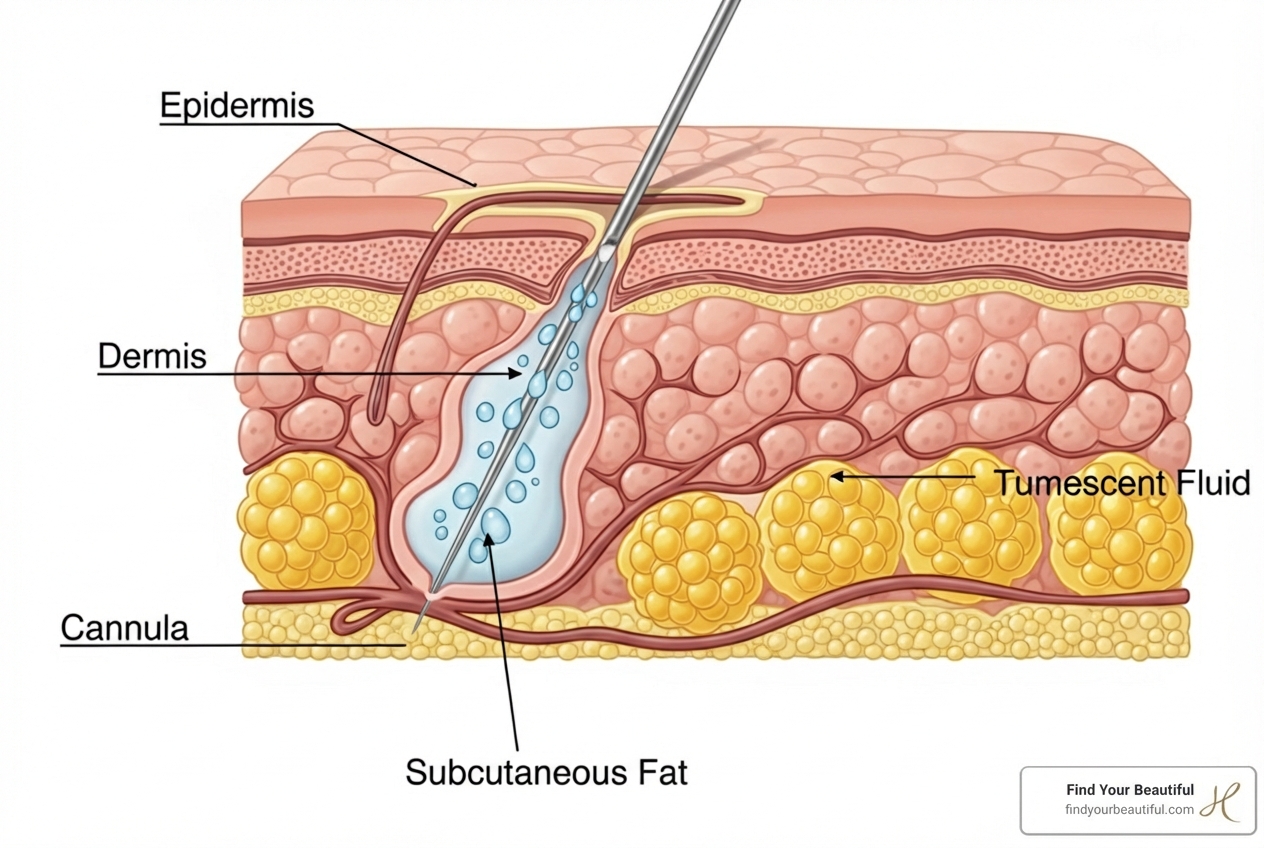
At its core, tumescent liposuction involves the meticulous injection of a specialized solution—the “tumescent fluid”—into the fatty tissue targeted for removal. This fluid is a carefully formulated mixture of:
- Lidocaine: A local anesthetic that effectively numbs the area, ensuring you feel no pain during the procedure.
- Epinephrine: Also known as adrenaline, this medication causes the blood vessels to constrict, significantly reducing bleeding and bruising.
- Saline Solution: A sterile saltwater solution that expands the fatty tissue, making it firm and swollen (hence “tumescent”), which facilitates easier and smoother fat removal.
Once this solution is injected, it works its magic. The lidocaine provides prolonged local anesthesia, often lasting up to 18 hours, meaning you’ll be comfortable throughout the procedure and often won’t need strong pain medication afterward. The epinephrine creates a near bloodless field, dramatically minimizing blood loss compared to traditional methods. And the saline solution swells the fat cells, making them easier to target and extract with a thin, hollow tube called a cannula.
This process allows for precise fat removal with minimal trauma to surrounding tissues. The swollen fat also makes it easier for our surgeons to sculpt and contour, leading to smoother, more natural-looking results. You can learn more about The Tumescent Technique explained in medical literature.
Tumescent vs. Traditional Liposuction
The differences between tumescent liposuction and its traditional counterpart are quite stark, particularly when it comes to patient experience, safety, and recovery.
Traditional liposuction typically requires general anesthesia, meaning you are completely unconscious during the procedure. While safe for many, general anesthesia carries its own set of risks, including potential complications like sudden drops in blood pressure, allergic reactions, heart attack, stroke, and postoperative confusion. It also often leads to a longer and more uncomfortable recovery period, with patients frequently experiencing significant nausea and grogginess as the anesthesia wears off.
Tumescent liposuction, by contrast, prioritizes local anesthesia. This means you avoid the systemic risks associated with general anesthesia entirely. The use of epinephrine in the tumescent fluid also creates a virtually bloodless field, which translates to significantly less blood loss—often less than what’s drawn for routine lab tests! This also means less bruising and swelling after your procedure.
Recovery is another area where tumescent liposuction truly shines. Because you haven’t undergone general anesthesia, you won’t experience the lingering grogginess, nausea, or other side effects commonly associated with it. This allows for a quicker, more comfortable post-operative period. Patients often resume light activities within 48-72 hours and are typically back to work within 2-5 days. This is a much faster timeline than the often weeks-long recovery associated with traditional methods, which can involve significant downtime and discomfort.
Tumescent liposuction is less invasive, safer, and offers a quicker, more comfortable recovery. It’s why we often recommend it as an excellent option for our patients in San Antonio. Find more about Tumescent Liposuction San Antonio.
How the Tumescent Fluid Makes It Possible
The tumescent fluid is the unsung hero of this procedure, making the entire “awake” experience not just possible, but comfortable and safe. Let’s dig a little deeper into its mechanism of action:
-
Lidocaine as a Local Anesthetic: The lidocaine in the solution acts as a powerful local anesthetic, directly numbing the nerve endings in the targeted fatty tissue. This means that while you are fully conscious, the area being treated is completely insensitive to pain. The slow absorption of lidocaine from the fatty tissue means the numbing effect lasts for many hours, well into your recovery period.
-
Epinephrine’s Role in Safety: Epinephrine causes the blood vessels in the treated area to constrict dramatically. This vasoconstriction is crucial for two main reasons:
- Minimized Bleeding: With blood vessels tightened, there’s very little blood flow to the area during fat removal. This significantly reduces blood loss, making the procedure much safer and leading to less bruising post-operatively.
- Slowed Lidocaine Absorption: The constricted blood vessels also slow down the rate at which lidocaine is absorbed into your bloodstream. This allows us to use a higher, yet still safe, dose of lidocaine to ensure complete numbness without risking toxicity.
-
Firming the Fat for Easier Removal: The large volume of saline solution injected causes the fatty tissue to swell and become firm, or “tumescent.” Imagine trying to scoop soft butter versus firm butter—the latter is much easier to manage. This firming effect allows the cannula to glide more smoothly through the fat, breaking it up and suctioning it out with less force and greater precision. This gentle approach translates to less trauma to your body and smoother results.
The precise composition and careful injection of this fluid are what allow us to perform liposuction effectively while you remain awake and comfortable. For a deeper dive into the science, you can find More on the tumescent technique.
Are You Awake During Tumescent Liposuction? The Anesthesia Explained
To answer the central question directly: Yes, for tumescent liposuction, you are typically awake during tumescent liposuction. This is a key distinguishing feature and a significant advantage of the technique. Instead of general anesthesia, which puts you completely to sleep, we rely on local anesthesia to ensure your comfort.
During your procedure, you’ll be in a conscious state. This doesn’t mean you’ll be having a casual chat about your weekend plans, but you will be alert enough to respond to our team and follow simple instructions. To further improve your comfort and manage any pre-procedure jitters, we often offer sedation options. This could include oral sedatives (like a Valium) or light IV sedation, sometimes referred to as “twilight anesthesia.” These options help you relax and feel at ease without rendering you fully unconscious. You’ll be in a calm, dream-like state, but still able to respond to simple instructions. Your comfort is our priority, and we tailor these choices to your individual needs and anxiety levels, ensuring a stress-free experience.
Here’s a quick comparison of the different anesthesia types used for liposuction:
| Anesthesia Type | Patient State | Risks | Recovery – |
|---|---|---|---|
| Local Anesthesia | Awake and alert, but the treatment area is numb. | Minimal risks, primarily related to the local anesthetic itself. Very low incidence of systemic complications. – | |
| Sedation (Twilight) | Drowsy and relaxed, but still conscious and able to respond. | Lower risk than general anesthesia. Patients breathe on their own. Some may experience temporary grogginess. – | |
| General Anesthesia | Completely unconscious and unaware. | Higher risks, including potential for nausea, vomiting, sore throat, and rare but serious complications like allergic reactions or breathing issues. Requires an anesthesiologist. | Longer recovery from the anesthesia itself. Requires significant post-operative monitoring. – |
Why are you awake during tumescent liposuction?
The primary reason for performing liposuction while the patient is awake is safety. By avoiding general anesthesia, we eliminate a significant category of risks associated with surgery. Patients who are awake and breathing on their own are not exposed to the potential complications of intubation and deep sedation. This makes the procedure accessible to a wider range of individuals, including those who may not be ideal candidates for general anesthesia.
Beyond safety, being awake offers several other key benefits:
- Faster Recovery: You avoid the post-anesthesia grogginess, nausea, and recovery time associated with being “put under.” Most patients can walk out of the clinic shortly after the procedure.
- Reduced Cost: Because an anesthesiologist is not required to be present for the entire procedure, the overall cost of awake liposuction is often lower.
- Improved Results: An awake patient can cooperate with the surgeon, such as by changing positions or tensing muscles. This allows the surgeon to access fat deposits more effectively and sculpt a more precise, natural-looking result.
This modern approach has revolutionized body contouring, making it a safer and more patient-friendly experience. Learn more about the benefits of Awake Liposuction San Antonio.
Managing Anxiety and Comfort During the Procedure
We understand that the idea of being awake during a surgical procedure can be daunting. Your comfort and peace of mind are our top priorities. Before the procedure begins, we typically provide a mild oral sedative, like Valium, to help you relax. This medication eases anxiety and creates a calm, comfortable state without putting you to sleep.
Throughout the procedure, you can listen to music or a podcast with headphones to create a more relaxing environment. Our experienced surgical team will be in constant communication with you, checking in to ensure you are not feeling any pain. The local anesthetic is extremely effective, and while you may feel pressure or movement, you should not feel discomfort. We create a supportive, patient-centered atmosphere to ensure your experience is as smooth and stress-free as possible.